Introduction to Langtang Circuit Trek
We sure hope you’re ready for an epic expedition because that’s exactly what awaits on the Langtang Circuit trek!
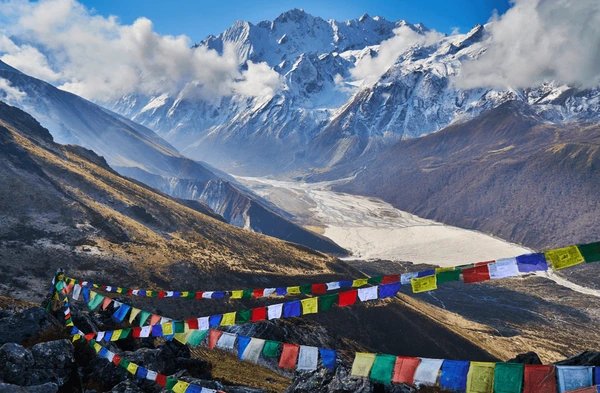
A hidden gem in Nepal, the Langtang region is awash with raw, natural beauty. An absolute feast for the eyes, this area is teeming with majestic glaciers glistening in the distance, a dense forest stretching out for as far as the eye can see, and small villages filled with warm, welcoming locals.
The Langtang circuit trekking route is quite unlike other trekking trails in the area, mostly because of its history and cultural richness. Best of all, the Langtang circuit trek map is dotted with diverse landscapes and microclimates. Indeed, you’ll traverse scenic trekking routes speckled with rhododendrons and bamboo, cross glacial valleys, and summit some of the most majestic peaks in the world.
Oh, and did we mention that this moderate route is ideal for beginners who want to dip their toes into the amazing world of trekking for the first time?
So, let’s take a look at the (many) adventures that await on the Langtang Circuit trek!
Overview of the Langtang Circuit Trek
The Langtang Circuit Trek offers a remarkable journey through the spectacular Langtang region of Nepal. Covering nearly 50 miles of lush terrain, the trekking route offers an ideal blend of culture and natural beauty – perfect for adventurers who want to enjoy an immersive experience in Nepal’s most beautiful areas.
You’ll find some absolute gems on the routes, including Kyanjin Ri which stands as the highest point of the Langtang Valley trek. While it can take up to five hours to reach the summit, we promise it’s well worth it for the incredible views that await at the top!
Contrary to popular belief though, you can’t just grab a Langtang circuit map and venture out on the slopes. According to a new regulation established in April 2023, all international trekkers should hire a licensed guide to hike the many routes in the area to ensure their safety. As such, we recommend that you book your guide in advance, especially if visiting in peak season.
Langtang Circuit Trek Itinerary 1: Langtang Valley Trek (11 Days)
The Langtang Circuit Trek is an epic adventure that starts off the moment you land on the bustling streets of Kathmandu.
But before we get into it, let’s start off with what everyone wants to know: How long is the Langtang trek? Well, the route covers 77 km, and while you can complete it in 5 to 7 days, we recommend extending your itinerary to 11 so you can explore the side treks and properly make the most out of your adventure.
With a maximum elevation gain of 16,355 feet, the route is ideal for trekkers with a moderate level of fitness.
Indeed, rich cultural encounters beckon on the Langtang Valley Trek, complete with an immersive experience in local traditions since most of the area is inhabited by the Tamang people.
Every step reveals a new marvel: from the mesmerizing Kathmandu to Syabrubesi drive speckled with otherworldly scenery to the gradual ascent through lush forests, the Langtang Circuit Trek is positively packed with hidden gems at every turn. You’ll get the chance to view some of the most popular peaks in Nepal, including Tserko Ri, Dorje Lakpa, and the famous Langtang Lirung.
Whether it’s the cheese factory at the Kyanjin Gompa monastery, the spectacular sights from Kyanjin Ri, or the alpine meadow at Mundu, there’s no denying that the Langtang Valley Trek is an absolute dream come true for fans of the great outdoors. You’ll also encounter thrilling experiences like crossing suspension bridges over glacial rivers and seeing glaciers up close.
Remember to keep your eyes peeled for rare fauna and flora, including the elusive red panda and Himalayan Tahrs.
With all of that in mind, here’s a breakdown of what you can expect from each day on the slopes:
Langtang Circuit Trek Day 1: Arrival in Kathmandu (1,400m)
Day 1 of your Langtang Circuit Trek starts off with your arrival in Kathmandu. With an elevation of around 1,400 meters above sea level, the vibrant capital city offers the ideal setting where you can acclimatize to the altitude.
Kathmandu is fringed on all sides by towering peaks, offering a gorgeous preview of the lush beauty that beckons in the Langtang region.
Infused with a blend of contemporary energy and ancient culture, the metropolis offers mazelike alleys that are just begging to be explored. After exploring popular tourist spots like Durbar Square, we recommend that you spend the first day resting in preparation for the trek.
After all, the adventure of a lifetime awaits on the Langtang Circuit Trek, and you do want to be prepared. If you’ve booked your expedition through an agency, you’ll probably meet your fellow adventurers and attend a briefing session where you’ll receive all the essential info about the trek.
Be sure to check your checklist to ensure that you’ve got all your gear. It’s also a good idea to stock up on provisions such as protein bars, jerky, dehydrated tea, coffee, and the like. If venturing out without a guide, it’s essential to have an updated Langtang circuit map as well.
Langtang Circuit Trek Day 2: Drive from Kathmandu to Syabrubesi (1,550m)
Day two of the Langtang Circuit Trek is when the adventure truly begins!
First things first though: if this is your first time, you’re probably asking yourself how far is Langtang from Kathmandu. Nepal’s capital city is over 61km from Langtang, which is an epic adventure in its own right.
Once you’ve properly acclimatized, you’ll journey to Syabrubesi which basically serves as a getaway to the majestic Himalayas. The drive from Kathmandu to Syabrubesi can take up to 7 hours by private vehicle or 9 hours by public bus, but it’s easily one of the most picturesque trips in Nepal.
As you leave the city, the landscape gradually morphs into a tapestry of terraced fields and lush green hills. The drive follows the Prithvi Highway before heading towards the dense forest that surrounds the Trishuli River.
Along the way, you’ll cross through snuggly small villages dotted with tea houses where you can stop for refreshments or to stretch your legs.
Langtang Circuit Trek Day 3: Syabrubesi to Lama Hotel (2,380m)
One of the highlights of your Langtang circuit trekking expedition, the trek from Syabrubesi to the Lama Hotel Langtang takes you on a captivating journey through the Langtang region.
Kicking off from the charming village of Syabrubesi in the Rasuwa district, the route covers Tiwasi, Pairo, Bamboo, and Rimche.
The trail follows various landmarks such as the Bhote Koshi River which leads you through a dense forest rich with bamboo, oak, and rhododendrons. You’ll also cross a couple of waterfalls and suspension bridges on your way to the hotel. Because this area forms part of the Langtang National Park, you’ll be asked to present your national park entry permit before being allowed to cross this area.
Covering a distance of nearly 16 km (approximately 10 miles), this part of your Langtang circuit trekking journey can be completed in 5 to 6 hours.
Most trekkers prefer to start the route early in the morning so they can reach the hotel by late afternoon on the same day. If you forgot your Langtang circuit trek map, rest assured that you can always request a copy at the hotel.
Langtang Circuit Trek Day 4: Lama Hotel to Langtang Village (3,430m)
On day 4 of your Langtang circuit trekking adventure, you’ll cover the Riverside Lodge – Ghodatabela – Thyangsyapu – Chyamki – Langtang route in 4 to 5 hours.
With an ascent of 1075 meters, this route is ideal for trekkers who want to learn more about the local culture. Half of the route takes you through a forest while the second half crosses a valley.
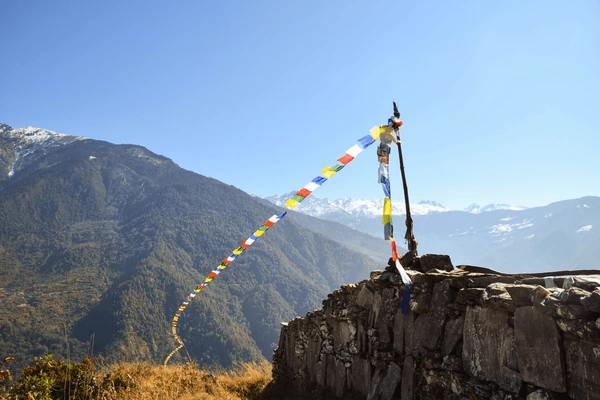
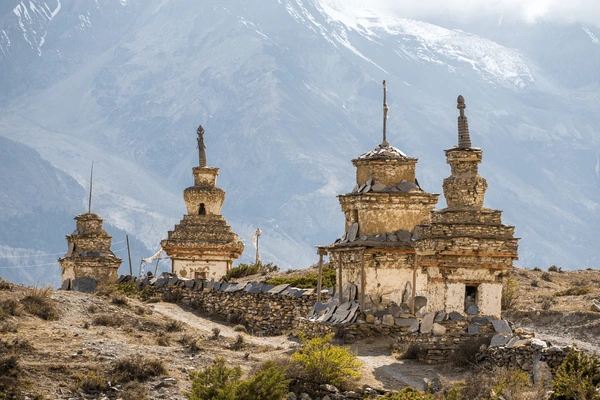
You’ll journey through several small villages on the way to the Langtang region, including Ghodatabela which is brimming with Tamang culture. Along the way, you’ll see numerous mani walls inscribed with stupas and prayers. These walls are easily recognizable with the brightly-hued prayer flags fluttering in the wind.
As you start to approach Langtang Village, you’ll notice that the landscape gently opens up to expansive alpine meadows surrounded by snow-capped Himalayan mountains.
This segment of the Langtang circuit trek offers a deep cultural immersion as you’ll learn more about the region’s painful past. Rebuilt after the devastating 2015 earthquake and avalanche, Langtang village stands as a testament to the resilience of the local community.
It’s important to know that the first part of the route does have a lengthy ascent. There’s another steep section right before reaching Langtang Village as well.
Langtang Circuit Trek Day 5: Langtang Village to Kyanjin Gompa (3,870m)
Encompassing some of the most gorgeous trekking routes in Nepal, the Langtang Village to Kyanjin Gompa trail is short but undeniably awe-inspiring. Known for its incredible scenery, this route takes you through Mundu, Singdum, and Yamphu before finally ending at Kyanjin Gompa.
You’ll pass by crystalline streams, mountain ranges, massive rocks, yaks, stupas, and oddly shaped boulders. This section of the Langtang circuit trekking route is also known for its many lookout points.
Kyanjin Gompa is a landmark that features on every Langtang circuit trek map – and for good reason! One of the highlights of the Langtang Valley trek, Kyanjin Gompa is an ancient monastery that’s believed to be over 600 years old. Drawing both trekkers and pilgrims from all around the world, this landmark is said to be something of a sanctuary for the Tibetan-Buddhist community.
With Langtang Lirung towering in the background, Kyangjin Gompa provides a calm space for meditation, so it’s recommended to maintain a quiet and respectful atmosphere while exploring this space. If you visit during a Buddhist festival though, you’ll be greeted by vibrant music and traditional rituals.
Covering a distance of 6.7 km, the Langtang Village to Kyanjin Gompa trail can easily be completed in two hours.
Langtang Circuit Trek Day 6: Exploration of Kyanjin Ri (4,773m)
Next up on the Langtang circuit trek map is an optional but highly rewarding route to Kyanjin Ri.
The highest point in the Langtang region, Kyanjin Ri stands at an impressive 4,773 meters. As such, you will be treated to jaw-dropping vistas that extend all the way to Tibet on a clear day. But that’s not all: on the way to the top, you’ll be greeted by even more mani walls, chortens, and alpine forests chock full of birch trees.
The trail does take you to high altitudes, so you may start to feel out of breath. If you’re not an experienced hiker, you might need some time to acclimatize to the elevation gain, so we recommend that you take it slow.
For the best trekking conditions, you should start off your trek as early as possible. Most trekkers choose to depart at 6 am to take advantage of the sun since afternoons are usually cloudy. Experienced mountaineers can take as little as 2 hours to summit – although it can take up to 5 hours depending on your pace and the weather.
One of the most impressive sections of your Langtang circuit trekking route, Kyanjin Ri offers unblemished views of the Langtang Lirung Glacier and the entire Langtang Lirung face. Remember to keep your eyes peeled for Yalla Peak (northeast of Kyanjin Ri) and the popular Tserko Peak as well.
Langtang Circuit Trek Day 7-8: Return Trek to Lama Hotel
Now that you’ve reached the final ascent on your Langtang circuit trek map, it’s time to begin the trek back to the guesthouses.
The 14.5 km trek begins early in the morning as you retrace your steps from Kyanjin Gompa to Lama Hotel. The longest day walk in the valley, this route takes you through flat, downhill terrains, so you can easily reach the hotel in under 7 hours.
If you want to try something different, you can also book a helicopter ride down to Lama Hotel – although this can be pretty pricey!
Langtang Circuit Trek Day 9: Lama Hotel to Syabrubesi
Day 9 of the Langtang Valley trek sees you making the descent trip from Lama Hotel back into Syabrubesi. This trekking route is a gentle journey past small villages that house quaint tea houses where you can kick back over a cup of chai or fuel up with a plate of Dal-Bhat (rice and pulses).
The trail winds down the same suspension bridges and gorgeous forests you walked through on your way up. If you didn’t have the time earlier, take a moment to appreciate the serene surroundings – not to mention the abundance of fauna and flora.
Depending on your pace, the trek back to Syabrubesi can take between 5 to 6 hours.
Langtang Circuit Trek Day 10: Drive Back to Kathmandu
After such a physically demanding adventure on those spectacular Himalayan slopes, we’re sure you’re ready to put your feet up and relax. Well, the good news is that you’ll get to do just that on the drive back to the metropolis.
Rest assured that the return trip is just as scenic as the drive from Kathmandu. As we mentioned earlier, the drive back can take up to 9 hours by public transportation or 7 hours by private jeep. You’ll find many small establishments serving breakfast, lunch, and dinner along the way, or you can always pack your own food if you don’t want to stop.
Upon arriving in Kathmandu on the last leg of your Langtang circuit trek, you’ll have the opportunity to rest and recuperate before perhaps exploring some of the (many) attractions in the city.
Langtang Circuit Trek Day 11: Departure from Kathmandu
On Day 11, you will prepare for your departure from Kathmandu. This marks the final spot on your Langtang circuit map, concluding an unforgettable adventure through the Langtang Valley trek.
Given that you’ll probably be quite sore after such an expedition, this would be an ideal time to check out one of Kathmandu’s first-class spas for a soothing body treatment before flying back home.
If you still have the adventure bug and don’t feel quite ready to head back home yet, rest assured that there are many more treasures to be uncovered in Nepal.
Langtang Circuit Trek Itinerary 2: Langtang Gosaikunda Trek (16 Days)
We’re sure by now you’ve realized that the Langtang circuit trekking route is a unique adventure for beginners and more experienced hikers alike.
Indeed, the Langtang region is an absolute feast for the senses, whether it’s the gentle gurgling of a stream, the verdant landscapes stretching out for as far as the eye can see, or the roar of a waterfall tucked deep in a forest.
Now, if you want an even more immersive experience in Nepalese culture and spirituality, you can always consider embarking on a Langtang Gosaikunda trek.
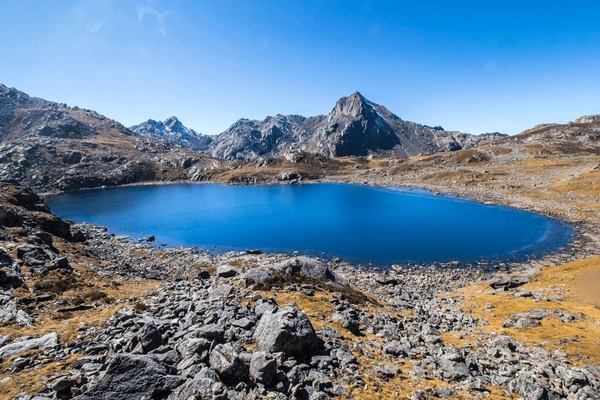
This 16-day route takes you on a captivating journey through the very heart of the Langtang region, offering trekkers a blend of spiritual significance, cultural richness, and natural beauty. The sacred lakes, such as Gosaikunda, revered by both Tibetan Buddhists and Hindus, make this particular trek renowned.
Shimmering alluringly from between those snow-capped peaks, the sacred lakes create a serene and mystical atmosphere that draws trekkers from all over.
We do have to point out that this Langtang circuit map is riddled with more challenging passes, so it’s best suited to experienced trekkers in great physical condition.
Langtang Gosaikunda trek Day 1-2: Kathmandu to Syabrubesi
Just like before, you’ll kick off your Langtang Gosaikunda trek with the drive from Kathmandu, passing by traditional Nepalese small villages along the way.
Historically-speaking, Syabrubesi has always served as the kick-off point for the Langtang trek and while the drive is no doubt long, it does offer you the chance to relax before embarking on this strenuous expedition. Culturally inclined travelers will also appreciate this glimpse into the rural life of Nepal.
Upon reaching Syabrubesi, you’ll be able to relax in a tea house as you start preparing for the trek ahead.
Langtang Gosaikunda trek Day 3-4: Syabrubesi to Lama Hotel to Langtang Village
Your real expedition begins on days 3 and 4 of the Langtang circuit trek.
After a hearty breakfast at your tea house, you’ll begin the trek from Syabrubesi to Langtang Village. This route takes you alongside the Langtang River and through thick forests, so there’ll be plenty of natural sights to enjoy along the way. You’ll also trek through small villages like Bamboo and Pairo.
After a full day of trekking, you will finally come to a stop at the iconic Lama Hotel in the afternoon. This is your chance to put your feet up, relax, and rejuvenate with a good night’s sleep at the hotel before continuing your way towards Langtang Village the next day.
You can expect altitudes of up to 3,430 meters along this two-day journey.
Langtang Gosaikunda trek Day 5-6: Langtang Village to Kyanjin Gompa
Next up on the Langtang Gosaikunda trek is the trip to Kyanjin Gompa. For many adventurers, this is one of the highlights of the journey.
Lying at an altitude of 3,860 meters, the ancient monastery is bursting with historical and architectural marvels alike. The villagers have restored Kyanjin Gompa to its former glory after it was badly affected by the 2015 earthquake, and it now stands as a beacon of their hope and resilience.
One of the most culturally charged sections on the Langtang circuit trekking route, the trek to Kyanjin Gompa features diverse landforms – so be prepared for flats, descends, and ascends alike. On your way towards the monastery, you’ll pass near Mundu Village, a place that’s known for its refreshing stream.
If you have the energy for it, we recommend that you set aside an hour or two to properly mosey around the monastery and cheese factory. On clear days, you can even spot the icefalls in Kimshung and Lantang Lirung from the monastery.
The day concludes with an overnight stay at Kyanjin Gompa.
Langtang Gosaikunda trek Day 7-9: Trek to Gosaikunda via Laurebina Pass (4,610m)
The trek to Gosaikunda via the Laurebina Pass is one of the most rewarding trekking routes in the area.
With plenty of strenuous downhill and uphill climbs, this route is mainly comprised of lavish bushes, gushing waterfalls, and dazzling vistas of the Himalayas. It’s also known for the sacred lakes of Gosaikunda, so depending on when you’re visiting, you may encounter plenty of pilgrims along the way.
The trek passes through Dhunche village where you’ll encounter various ethnic groups like the Gurung, Tamang, and Sherpa people. The scenery gradually starts to shift from small settlements to rockier terrain and cascading hills with a river weaving its way toward Shin Gompa.
From there, the route traverses more rugged terrains and alpine meadows, gradually ascending until you reach Gosaikunda Lake, one of the most sacred spots in the country. Nearby, you’ll find other spiritual lakes like Bhairav Kunda and Saraswatikunda.
This section of the Langtang Circuit Trek can be challenging mainly because the Laurebina Pass lies at a higher elevation.
Langtang Gosaikunda trek Day 10-12: Trek through Helambu Region
The descent through the Helambu area starts right after crossing the Laurebina Pass.
After the arduous ascent to the sacred lakes, chances are that you’ll find the Langtang Gosaikunda Helambu trekking route easier by comparison, especially since you’ll be leaving the thin air and higher altitude behind.
The Langtang Helambu trek does get a bit harder before it gets easier though, since you’ll ascend steeply through pine and juniper forests to reach Tharepati Pass at nearly 3,700 meters above sea level. This area is an excellent viewpoint for admiring the towering peaks around Helambu.
On your way down, you’ll walk past an army checkpoint and cross some woodlands. You’ll also find a few guest houses along the way if you want to make an overnight stop. This trek is characterized by its fresh, oxygen-rich alpine air, terraced fields, and small villages like Magen Goth which is replete with traditional Tamang hospitality.
Langtang Gosaikunda trek Day 13-16: Return to Kathmandu
The final leg of the Langtang circuit trek takes you back to Kathmandu.
After crossing the Helambu area, you’ll reach Chisapani village, a gorgeous nook of tranquility nestled in the foothills of the mountains. This is a great place to stop for the night and enjoy a local feast while interacting with the locals.
One last trek awaits in the morning but believe us when we say it’s worth the effort: from Chisapani, you will hike to Sundarijal, another area that’s awash with raw, natural beauty. Visitors can safely enjoy a refreshing dip in the Sundarijal waterfalls, which this spot is especially known for. You can also check out the Sundarimai Temple, located just a short distance from the Sundarijal Falls.
Just like your initial drive from Kathmandu, your return journey involves several long hours in a jeep or bus, so don’t forget to pack plenty of snacks and water.
Langtang Circuit Trek Itinerary 3: Langtang Tamang Heritage Trek (14 Days)
Are you interested in the local heritage, but don’t have sufficient experience or fitness level to embark on the Gosaikunda trek? Then, you can always check out the Langtang Tamang Heritage Trek, which is just as culturally immersive, but a tad less challenging.
In fact, it’s possible to enter the route from different directions, depending on your fitness level.
Kicking off from Kathmandu, the Langtang Tamang Heritage trek is one of the most enriching journeys you can take in Nepal. There’s a fascinating medley of nature and cultural exploration, making it a great trek for explorers who want to experience the classic lifestyle of the Tamang people. As you venture into communities like Thuman, Tatopani, and Gatlang, you’ll even get the chance to share the local traditions and customs.
Offering an eye-opening insight into the Langtang circuit trek, this circular route takes 14 days.
Langtang Tamang Heritage Trek Day 1-2: Drive from Kathmandu to Syabrubesi
The starting point of the Tamang Heritage trek kicks with the panoramic drive from Kathmandu to Syabrubesi, crossing through authentic small villages where you can make a pit stop and stock up on essentials.
The winding roads can make some trekkers prone to travel sickness though, so it’s always a good idea to carry anti-nausea medication during this drive.
Langtang Tamang Heritage Trek Day 3-4: Trek from Syabrubesi to Gatlang
This is where the cultural immersion truly begins.
As we’ve mentioned before, the Langtang region is awash with Tamang villages, offering travelers the opportunity to develop a connection with the local culture.
With an altitude of 2,238 meters, the 5-hour journey from Syabrubesi to Gatlang is quite a pleasant one, punctuated by turquoise streams, woodlands, and unblemished mountain vistas. Towering above this tapestry of dark green and crystalline blues is the Ganesh Himal mountain range. The first leg of the journey starts off with a trek up to Rongga Bhanjyang. From there, you will make your way to the Ganesh Himal ridge.
As you approach the Tamang villages, you’ll see a scattering of prayer flags, mani stones, prayer wheels, and chortens on the trekking routes.
Keep your eyes peeled for a yellow marking that marks Gatlang Village. You’ll find basic but undeniably comfortable accommodation options with plenty of that trademark Nepalese hospitality and good food.
Wi-Fi can be quite rare in the Tamang villages, but that only gives you a chance to connect with the locals and learn more about their traditions.
Langtang Tamang Heritage Trek Day 5-7: Trek to Tatopani (Hot Springs)
The road to Tatopani is easily one of the most enjoyable trekking routes on the Langtang Circuit Trek. This journey not only takes you through more Tamang small villages but also leads you to natural hot springs, perfect for soothing your muscles after a full day of trekking!
From Gatlang, you’ll embark on a gradual descent of 1 to 2 hours that traverses a bridge. Along the way, you’ll encounter a stunning village known as Chilime. With an exceptionally welcoming population and wide, open fields, this village is a great place to break for a meal.
From there, the trek features a steep ascent that leads to a second village known as Gonggang. This community provides yet another opportunity to witness (and sometimes partake) in local rituals and festivals while experiencing the culinary delights of the region.
From there, you’ll reach Tatopani in two hours.
Tatopani loosely translates to ‘hot water’ in Nepali, and that’s exactly what awaits on this leg of the Langtang circuit trekking route. Locals and tourists alike find the hot springs quite popular for their therapeutic and rejuvenating properties, as they believe the mineral-rich waters offer these benefits. As such, there can be a bit of a wait if you’re trekking during peak season.
If you want to spend the night in Tatopani, you can always pitch up your tent in a grassy area or check out locally owned accommodations like the Eco Guest House.
Here’s an insider tip for you: if you take a short, 10-minute walk west of Tatopani village, you’ll come across a little-known observation point on the Langtang circuit trekking journey which treats you to gorgeous views of the Ganesh Himal, the Langtang Ridge, and many Tibetan peaks.
Langtang Tamang Heritage Trek Day 8-10: Trek to Kyanjin Gompa via Lama Hotel
From Tatopani, you’ll cross through more Tamang villages like Thuman and Briddim on your way to the ancient monastery of Kyanjin Gompa.
An absolute highlight on the Langtang circuit trek, the trek to Kyanjin Gompa is a heritage experience in its own right. Traders traditionally took this route to bring their animals, salt, and various wares into Nepal from Tibet.
Of course, no Langtang Valley trek would be complete without a quintessential stop by Kyanjin Gompa, one of the most important religious sites in the entire country. The Langtang River accompanies you for most of the way as you make your way from Tatopani to Kyanjin Gompa.
While moderately challenging, it is a long trek, so we recommend that you cross through the forest to stop at Lama Hotel for the night.
Langtang Tamang Heritage Trek Day 11-14: Return via Langtang Village and Syabrubesi
The final days of your Langtang circuit trek take you through the historic Langtang Village. The disastrous earthquake that hit Nepal in 2015 forever engraved this charming yet unassuming village in Nepalese history.
The new Langtang, dotted with guest houses, lies just 300 meters from the ruins of the destroyed village. As such, you can always extend your trek and spend a few days getting to know the locals. Despite its painful past, you’ll quickly notice that the villagers display an unwavering strength of spirit – something that never fails to fascinate any tourist who visits the area.
You can also view the ruins of the former village by taking the Langtang trekking route since the trail traverses the field of boulders and rocks that marks the site where traditional Tamang houses once used to lie.
After leaving Langtang Village, you’ll start the descent back to Syanbrubesi where your jeep or bus back to Kathmandu will be waiting.
Packing Essentials for the Langtang Circuit Trek
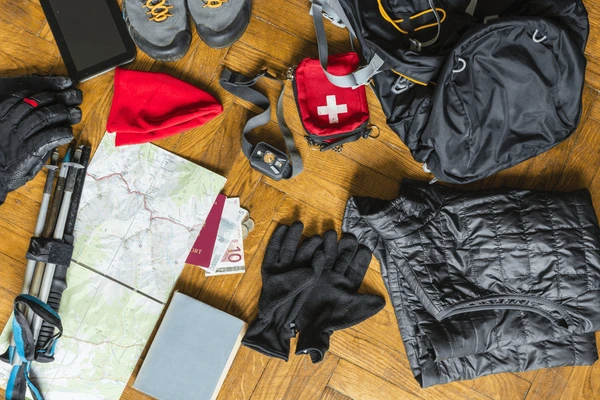
If you’re doing the Langtang Circuit trek in February, it’s important to pack the proper clothing and accessories to keep you warm on the slopes. After all, February may be the best time for a Langtang Trek, but daytime temperatures can range from 5 to 10 degrees Celsius during the day. At night, the thermometer can drop down to -10 degrees or lower, so don’t forget those sub-zero sleeping bags!
Here’s a list of all the essential trekking equipment that you definitely need to include in your packing list for the Langtang Circuit Trek:
- Base/Mid/Outer layers
- Quick-drying trekking pants and shirts
- Rain gear
- Sun hat and sunglasses
- SUV (SPF 40+)
- Warm gloves and hats
- Trekking boots
- Trekking poles
- Water filters/tablets
- Protein/energy bars/jerky/dried food
- Lip balm
- Toilet paper
- 30-liter day pack
- Rucksack
- Gaiters
- Grade B1 or B2 mountaineering boots
- Hut shoes
- Compression sack
- Spare batteries
- Head torch
- Drinking bottles
- Crampons
- Mountaineering harness
- Walking axe
- 2x120cm Climbing slings
- First aid kit
- Wash kit
- Karabiners
Best Time to Trek the Langtang Circuit
If you’re familiar with the Langtang Valley trek, you probably know how the climate can either make or break your trip. Indeed, there’s nothing worse than having to cancel a meticulously planned expedition simply because of the weather.
After all, there’s no denying that the Langtang trek cost can be expensive, so it’s important to make sure that visit at the right time.
Because the Langtang Nepal weather can be treacherous, we recommend that you pay close attention to meteorological warnings even if visiting in peak trekking season
As far as the Langtang circuit weather is concerned, most trekkers choose to venture out in spring (March to April) and autumn (October to November). Although these seasons offer the best time for a Langtang Trek, the routes can become quite crowded.
As such, more experienced trekkers often choose to undertake their Langtang Circuit trek in February instead. Bear in mind that it’s not advisable to trek off-season unless you’ve got a lot of experience under your belt and are accompanied by a licensed guide.
Comparing the Langtang Circuit Trek with Other Treks
The adventure of a lifetime awaits on the Langtang trek, regardless of your experience level. Due to its topography and varying altitudes, you can break this trek down into various itineraries.
More importantly, this journey offers the kind of flexibility that you won’t usually find on more challenging treks like, say, the Everest Base Camp or the Annapurna Circuit treks. For more experienced trekkers, the Langtang circuit trek is a great way to acclimatize to higher terrains before embarking on more intense adventures.
Do you want to learn more about the magical experiences that await in the Himalayas? Then be sure to check out our take on Langtang vs Everest Base Camp and Annapurna Circuit vs Langtang expeditions.
Conclusion: Why Langtang Circuit Trek is a Must-Do Adventure
There you have it – one of the most epic journeys across the majestic Himalayas.
Now, the Langtang Valley trek is generally safe (especially if you book through a reputed tour company!). However, accidents do happen, which is why it’s important to get travel insurance before embarking on your expedition.
The Langtang Circuit trek is often said to be a transformative journey, one that connects you with the local communities while creating a profound respect and appreciation for Nepalese culture.
As you wander those magnificent trekking routes dappled across the Langtang region, there’s no doubt that the forests, the waterfalls, the sacred lakes, and the incredible hospitality of the Tamang people all come together to create the kind of memories that will last a lifetime.