

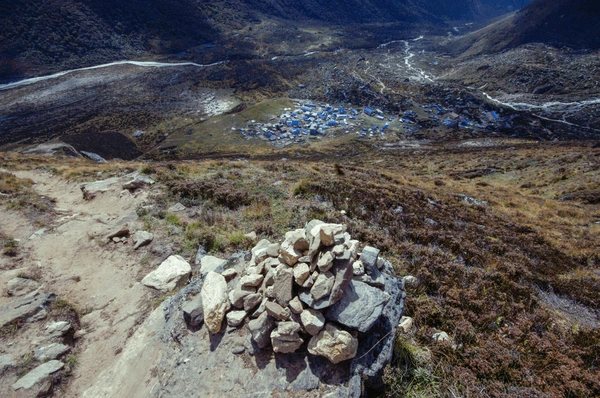
Hold on to your trekking boots, we’re heading to one of the most picturesque trekking spots in Nepal!
An awe-inspiring place tucked away amidst the amazing Himalayas, Langtang Valley is an area that’s as historic as it’s mesmerizing. Deeply engraved in local history, this valley offers an abundance of routes for just about every fitness level.
The Langtang Valley trek difficulty level is moderate, making it one of the most accessible treks in the area. Now, the Langtang trek may be moderately challenging, but it requires plenty of physical preparation and mental endurance. After all, this route has quite a few trekking challenges like the high altitude, unpredictable weather patterns, and uneven trail conditions – all adding up to the difficulty of Langtang trek.
But don’t worry though: while it’s no doubt a trekking challenge, there are plenty of ways in which you can prepare for this incredible adventure – so let’s get started!
Factors Influencing the Difficulty of Langtang Trek
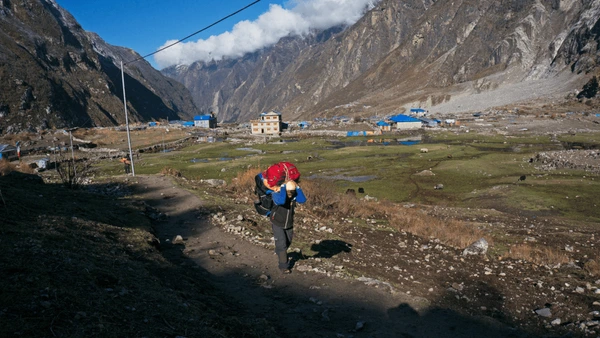
Altitude and Symptoms of Altitude Sickness
One of the most important things to remember when trekking through the Langtang region is that, regardless of your experience, the risk of altitude sickness is always there. After all, the Langtang Valley lies at an elevation of nearly 16,500 feet above sea level. If you’re not used to the elevation, this can cause some altitude challenges like acute mountain sickness.
Don’t let that deter you from the trek of a lifetime though. High altitude trekking may come with some challenges, but there are some things you can do to lower the risks – more on that below!
We also suggest that you listen to your body and keep a close eye on your symptoms, especially when you reach spots like Kyanjin Gompa, located at an elevation of nearly 13,000 feet.
Preparation Tips: Physical Fitness and Mental Preparedness
It’s not just about altitude sickness though: what a lot of rookie trekkers ignore is that you do need to be physically and mentally prepared for the Langtang Valley trek difficulty.
While trekking the Langtang region isn’t necessarily as strenuous as, say, hiking up to Everest Base Camp, we recommend that you embark on an endurance and fitness training journey several months before your trek.
We do have to point out that the Langtang trek Nepal is entirely suitable for new trekkers with a moderate fitness level since you don’t need any technical skills to complete the journey. Because the route has some steep ascents and descents, proper strength training and endurance is a must. You may wish to plan some practice treks. If you don’t live near any trails, you can always use a treadmill and gradually increase the incline. Alternatively, you can always train on a Stairmaster.
Once you’ve built up stamina, you can start working out with your trekking backpack, so you get used to the feel and heaviness of it. The great thing about physically preparing for your trek is that it’ll also help you develop the confidence you need to tackle those trails.
Terrain and Trekking Trails in Langtang Region
As far as the Langtang trek difficulty is concerned, it’s good to know that the trekking routes are definitely shorter and more accessible than other trails in Nepal. That being said, the expedition does consist of rugged trekking paths that can feel challenging for new trekkers. If you’re trekking in the off–season, you may also have to deal with muddy trail conditions – but this shouldn’t be an issue if you’re visiting in spring or autumn.
Here are some of the most popular trekking paths in the Langtang region to help you with your route planning:
Langtang Valley Trek
If you’re worried about the Langtang trek difficulty, this definitely is the trek to start with! The difficulty level is pretty low but just a quick heads-up: you’ll cross through thick forests of pine, oak, and rhododendron on your way to the village. You’ll also traverse numerous suspension bridges to get across the Langtang Khola River, something that can be quite thrilling as you watch the water gushing underneath.
Gosaikunda Trek
As far as the Langtang trek difficult is concerned, the Gosaikunda trek is a bit more strenuous. There aren’t as many suspension bridges as the Langtang Valley trail, but you will still encounter a couple of them.
Some sections of the route can be particularly challenging, like the steep ascent to the Laurebina Pass (4,610 meters). In addition to being super steep, the trail is rocky and uneven. If you can make it to the summit despite the Langtang trek difficulty, you’ll be rewarded with spectacular views of key Himalayan peaks like Ganesh Himal and Langtang Lirung.
Tamang Heritage Trail
If you ask us, this is the middle ground if you want to find a medium Langtang trek difficulty level. You’ll still cross suspension bridges and rhododendron forests, but the ascents are pretty moderate. Best of all, you’ll also trek through terraced fields, past natural hot springs, and across river valleys as you visit the many cultural sites in the Tamang Heritage Trek.
Key Sections of the Langtang Valley Trek and Their Difficulty Levels
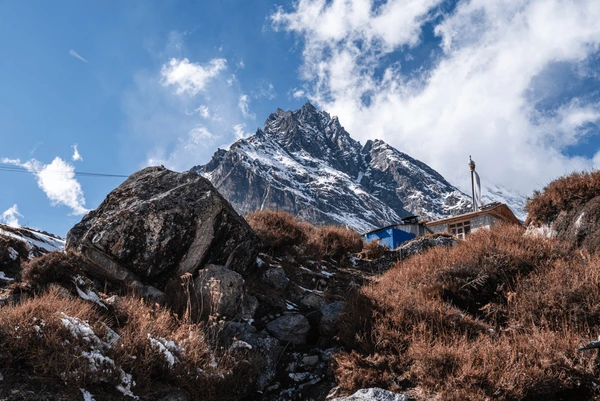
Lama Hotel to Langtang Village: Steep Ascents and Descents
One of the (many) highlights of the Langtang district, the Lama Hotel offers an amazing cultural experience. After all, this is the trekking hub where you’ll get to mingle with the Tamag people as well as local and international trekkers from all over.
As wonderful as this place is though, we do need to warn you about some fairly challenging ascents and descents that you’ll probably encounter between Lama Hotel and Langtang Village.
The trail gradient is moderate at first, but you’ll soon come across some steep paths as you approach Langtang Village – something that can impact the overall Langtang trek difficulty. In fact, there’s an ascent around 1,000 meters that starts off in a forest before passing past several villages.
The last leg of the trek to Langtang Village does require some trekking effort and careful footing.
Langtang Village to Kyanjin Gompa: Reaching the Highest Point
We won’t sugarcoat it: as far as the Langtang trek difficulty is concerned, the trek from Langtang Village to Kyanjin Gompa is one the most demanding parts of the adventure. Standing at 3,870 meters, Kyanjin Gompa stands as the highest point of the Langtang trek.
The steep terrain takes you past massive boulders, mountain ranges, stupas, pastures where the yaks often go to graze, and turquoise streams gurgling by.
Because of its elevation, the risk of altitude sickness is higher up there. We also recommend that you bring some warm layers even if trekking in springtime because Kyanjin Gompa is prone to cold winds, again due to the elevation.
Despite the altitude challenge and summit effort, we promise that the Langtang trek difficulty is all worth it though! After all, Kyanjin Gompa is by far one of the most historic spots in Langtang. It’s home to an ancient, centuries-old monastery that serves as an important spiritual site. Over there, you’ll also find a functioning factory where you can watch yak milk being processed into cheese.
Optional Hikes to Tsergo Ri and Other Peaks
Depending on your fitness level and energy, you can take a side trek to nearby spots like Tsergo Ri. While this does come with additional challenges, Tsergo Ri is known for its panoramic viewpoints with 360-degree vistas of the lush surroundings.
Another popular side trek is the route to Kyanjin Ri which towers at nearly 5,000 meters above sea level. Believe us when we say the views are so unbelievable from up there that on a clear day, you can even see all the way to Tibet.
Just a quick heads-up though: there’s quite a sharp ascent up to Kyanjin Ri and the air up there is thin so you can start to feel out of breath. If you’re a novice trekker, it wouldn’t hurt to bring equipment like supplemental oxygen with you, just in case.
Equipment and Preparation to Handle the Langtang Trek Difficulty
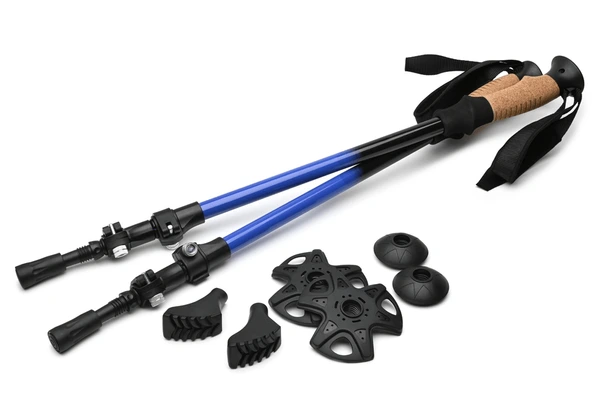
Using Trekking Poles and Sleeping Bags for Comfort and Safety
Rest assured there’s plenty of trekking equipment out there that you can use during the trek. For example, trekking poles will go a long way into ensuring that you can maintain your balance and footing on the more difficult sections of the trek.
Speaking of the Langtang trek difficulty, here are some additional gear essentials and trekking equipment that will no doubt make things easier for you on the trail:
- Walking axe
- 2x120cm Climbing slings
- First aid kit
- Wash kit
- Karabiners
- Base/Mid/Outer layers
- Quick-drying trekking pants and shirts
- Rain gear
- Sun hat and sunglasses
- SUV (SPF 40+)
- Warm gloves and hats
- Trekking boots
- Trekking poles
- Water filters/tablets
- Protein/energy bars/jerky/dried food
- Lip balm
- Toilet paper
- 30-liter day pack
- Rucksack
- Gaiters
- Grade B1 or B2 mountaineering boots
- Hut shoes
- Compression sack
- Spare batteries
- Head torch
- Drinking bottles
- Crampons
- Mountaineering harness
We do want to emphasize that sleeping bags are non-negotiable, especially when it comes to cold-weather preparation. Because of the altitude, the thermometer does dip after sunset, you want to make sure that your sleeping bag and sleeping mat are both adapted to the cold weather and high altitude.
Langtang Trek Difficulty: Weather Challenges and Trekking Season
We can’t talk about the Langtang trek difficulty without mentioning seasonal trekking. In fact, proper weather preparation can literally make or break your trek.
For this reason, we recommend that you trek during springtime (March to May) not only are the mountain conditions pleasant during this time, but there’s a very low risk of rain. Not only does this reduce the Langtang trek difficulty level, but the trails are far less slippery and muddy. Best of all, the skies are gloriously clear in the springtime – perfect for soaking up unblemished views of the snow capped mountains.
We won’t lie to you though: spring can get crowded. As such, you can also book your expedition in the fall (September to November). The conditions and Langtang trek safety are pretty much the same as in the springtime except it’s just a bit colder, so pack accordingly.
Langtang Trek Difficulty: Managing Altitude Sickness and Staying Safe
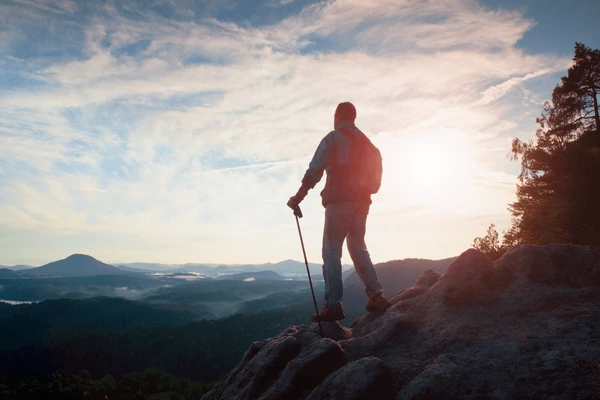
Hydration Advice and Acclimatizing Slowly
Don’t forget to stay properly hydrated during your trek to decrease your risk of altitude sickness.
And by hydration, we do mean water. Plenty of guest houses serve beer along the trail, but booze can dehydrate you even more, so we suggest you stick to water, hot infusions, and fruit juices. In fact, the Langtang region is famous for its Sea Buckthorn Juice, a local delicacy that’s rich in numerous vitamins and minerals. According to Tibetan medicine, this juice can help lower the risks of altitude sickness. It’s also great for staying hydrated.
When trekking, you should also take it slowly and make a gradual ascent instead of rushing through your trek. Known as acclimatization, the gradual process will help your body adapt to higher elevations, low oxygen, and thin air, again reducing the risks of altitude sickness.
One of the best acclimatization tips that you can follow, in addition to drinking a lot of water, is to trek at a slow and steady pace. In fact, a huge part of high-altitude trek safety is to take a few rest days to help your body adapt to the elevation.
Recognizing Symptoms of Altitude Sickness and Taking Action
Now that we’ve covered how to prevent it, let’s take a look at the most common symptoms of altitude sickness:
- Fatigue
- Fogginess
- Reduced coordination and performance
- Lethargy
- Headaches
- Poor appetite
- Dizziness
- Weakness
- Difficulty sleeping
The first thing to do if you develop any symptoms of altitude sickness is to alert your tour guide. If you’re trekking alone, we suggest you head over to the nearest tea house or rest stop and let the owners know. Locals are extremely knowledgeable about altitude sickness.
If the symptoms persist, we strongly recommend that you head down to a lower altitude. Pushing through altitude sickness and continuing your trek despite the symptoms is highly dangerous and can lead to a host of medical conditions. As such, it’s crucial to take the proper health precautions by adopting the right mountain safety and altitude awareness protocols.
Langtang Trek Difficulty: Beauty and Challenges Await
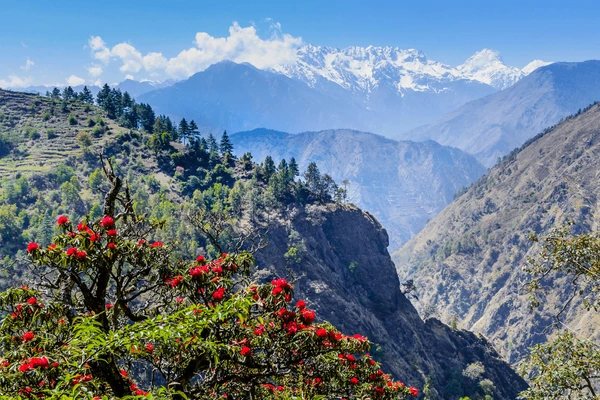
Stunning Views of Langtang Lirung and Ganesh Himal
Okay, enough with the heavy! We’ve covered the risks and Langtang trek difficulty but on to the fun stuff now.
You’ll be glad to learn that plenty of trekking rewards await on this trek – starting with the panoramic views and incredible mountain scenery. Along the way, you’ll not only encounter rare flora and fauna, but you’ll also be treated to vistas of the iconic Langtang Lirung and Ganesh Himal, making all your efforts worthwhile.
The Langtang region is also famed for its visually striking tapestry of landscapes and biodiversity – not to mention the profound cultural experiences that it offers. You’ll encounter plenty of Tamang and Sherpa people along the way, not to mention the Hyolmo people who live in Langtang National Park.
Immersive Experience in Langtang National Park
It’s not just about the views though. Despite the Langtang trek difficulty level, you’ll trek through some of the most awe-inspiring protected areas of Nepal, including the famous Langtang National Park.
It’s no secret that the Langtang region is awash with raw, natural beauty – not to mention an abundance of flora and fauna. Dark emerald greenery stretches out for as far as your eyes can see and, in the distance, you’ll even spot peaks like Dorje Lhakpa and Yala.
For a more immersive national park experience, we suggest that you take your time to explore the place. If you’re lucky, you may even have some wildlife encounters since the region is teeming with rare animals like the elusive red panda, Langur monkeys, Himalayan Black Bear, Himalayan Thar, and the Snow Leopard.
If you’re a bird watcher, you’ll be glad to learn that the park also houses over 250 bird species.
Conclusion: Is the Langtang Trek Difficult?
It’s only natural to wonder about the difficulty of Langtang trek, especially if this is your first time exploring this area.
The Langtang Valley trek difficulty may sound a bit intimidating to beginners who don’t have a lot of trekking experience. After all, it’s an absolute adventure challenge riddled with high-altitude conditions, uneven terrain, and unpredictable weather. Still, with the right trek preparation, it is entirely possible to embark on a unique adventure that’ll bowl you over!
We encourage you to carefully map out each step of your Langtang trek, stick to the safety protocols, and – more importantly – start working on your physical fitness several months before your trek to make sure that your expedition goes off without a hitch.
FAQ Section: Common Questions About Langtang Trek Difficulty
If you’ve never trekked in the region before, you’re probably wondering how difficult is Langtang trek? Well, if you’re doing trek comparisons, we’d say that this is one of the most doable Nepal treks. You’ll start to feel the Langtang trek difficulty as you approach Langtang Village, but all in all, the trek doesn’t require any technical experience.
Even though it’s suited to beginners with a decent level of physical fitness, you do need to be both physically and mentally prepared to undertake this trek. The fitness requirement for this trek includes plenty of physical endurance and muscular strength.
As such, we suggest that you embark on a cardiovascular and weightlifting regimen as part of your trek preparation.
While we can’t talk about Langtang trek difficulty without mentioning altitude sickness, rest assured that acute symptoms are entirely preventable if you take the proper health precautions. Altitude awareness is crucial to managing the symptoms – or preventing them altogether.
The key is to stay properly hydrated while making slow ascents. Don’t forget to pause for breaks and fit in some rest days so your body has time to acclimatize to the higher elevation.