Introduction to the Langtang Avalanche 2015
Sharing a border with Tibet, the Langtang region is awash with incredible sights. From dense forests of rhododendrons to majestic snow-capped peaks and glaciers, the Langtang region is often said to be one of the most beautiful in the world – and for good reason!
After all, this area is home to plenty of iconic sights, not to mention a diverse tapestry of landscapes and wildlife with one of the popular trekking routes, Langtang valley Trek.
The region is engraved in Nepali history because it was the epicenter of the tragedy that happened in the Langtang avalanche 2015. On April 25 2015, the Langtang region was severely affected by the Nepal earthquake that shook the entire country, causing significant loss of life.
To this day, Langtang tells a tale of survival and resilience, one that speaks volumes about the local community’s strength in the face of impossible adversity.
What Triggered the Langtang Avalanche?
The Langtang Earthquake Avalanche’s Impact on Langtang
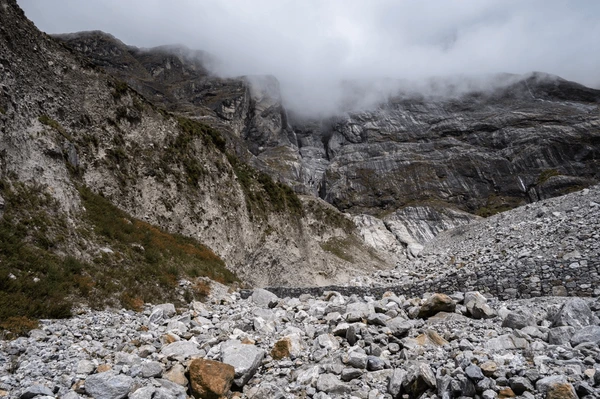
The Langtang avalanche 2015 was one of the most catastrophic events the country ever saw. The entire valley floor shook from the sheer force of the earthquake.
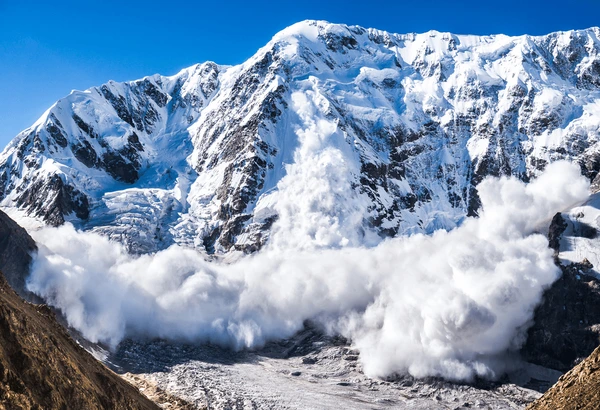
The impact of the Nepal earthquake was made worse by the fact that the original village used to lie right below the southern face of Langtang Lirung. Before the Langtang avalanche 2015, there was a frozen valley above the village which housed a frozen lake and Langtang glacier. The force of the impact broke it apart. This sent 40 million tons of ice and rock funneling down to the village, crashing over the settlements and turning everything to dust.
This was followed by a massive frozen lake and boulders that would also tumble down to the village.
In a few seconds, everything from the houses to the trees were gone. The trails completely disappeared, and it is believed that the force of the impact even wiped out an entire river.
Later, experts would work out that it might have been safer to stay put indoors since virtually everyone who ran outside to seek shelter ultimately perished. When survivors would finally manage to enter the ruins of their houses after the Langtang avalanche 2015, they would be greeted by a harrowing sight: the second and third floors of virtually every house was thickly blanketed in chunks of large, glacial snow.
Langtang Avalanche 2015: Destruction in the Village and Surrounding Areas
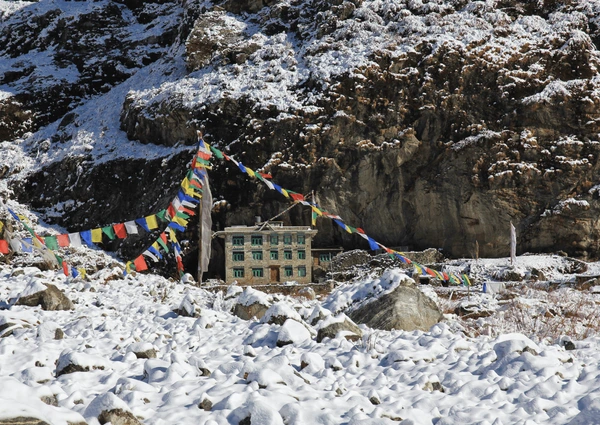
Langtang Village and the Avalanche’s Aftermath
What makes the Langtang avalanche 2015 even more tragic is the fact that absolutely no one was prepared for what was to come, which only added to the scale of the tragedy.
Just the night before, the whole village had been brimming with folkloric songs, dances and rituals because everyone was celebrating Ghewa, one of the most important festivals in the area. Everyone was up until past midnight and the celebrations included local villagers, tourists, as well as the locals from nearby villages.
What no one could anticipate was that this would be the very last Ghewa for a very long time.
Since the following day was a Saturday, most people were sleeping in – no doubt still tired from the previous night’s festivities. At four minutes to noon, a massive 7.8 magnitude earthquake rocked the country to its core. The earthquake was so intense that neighboring countries like Bangladesh and China even felt it.
But it wouldn’t end there: the force of the earthquake sent shockwaves all through Langtang’s valley floor and the side of the valley. This triggered a massive avalanche that would eventually send millions of ice and rock rolling towards the village, covering every single surface.
To help you understand the impact of the avalanche, bear in mind a nearby forest was entirely flattened just by the air pressure itself. It was so horrific that out of all the homes the villagers built with their own hands, only one survived the impact.
Over 350 people died or were reported missing.
Other Villages in the Langtang Valley
While Langtang Village was the most affected, other settlements in the Langtang National Park were also severely impacted by the earthquake and avalanche. In fact, later on, it was shown that the earthquake’s impact was so bad that it actually changed the landscape of many communities and villages in the Langtang Valley.
For instance, the historic settlement of Kyanjin Gompa bore significant damage, even though it wasn’t as badly damaged as Langtang Village. For this reason, the local people headed up to Kyanjin Gompa where they would set up shelter camps and seek refuge from the aftershocks.
Survival Stories from the Langtang Avalanche 2015
Foreign Trekkers and Local Survivors
While over 300 people died or were reported missing in the Langtang avalanche 2015, the tragic events showcased plenty of resilience and strength of spirit. You only have to look at the survivors to realize what they went through to try to escape the devastating events.
Since Langtang is one of the premier trekking destination in Nepal, the survivors consisted of both local people and foreign trekkers.
For example, three American trekkers (Della Hofman, Cory Ascolani, and Eric Jean) were at a bamboo campsite when the earthquake struck. At first, they didn’t even register what was happening until they saw the villagers pouring out of the houses. While they eventually sought shelter under a table, they ended up joining a group of villagers who was heading towards a nearby cave.
Unfortunately, the cave was filled to the brim so many survivors had to hold on to the rock face outside as they waited for the aftershocks to subside.
Athena Zelandonii, an Australian photographer, was up near Kyanjin Gompa when the earthquake and avalanche struck. After seeing what she described as a wall of ice and snow covering them from all sides, she decided to trek back to Langtang village with a few other survivors she met on the trail. What she didn’t expect was to see the entire place completely wiped off. Instead, there were around 130 to 140 other survivors huddled together as they waited for help to arrive.
Kartok Lama, a local survivor from Langtang, described how her tea shop was damaged in the disaster. Other notable survivors include Gyalbu Lama who was able to document the ruins of his home for the Langtang Memory Project, Pasang Lama whose entire family perished, and Tim Gocher who would soon be known for his dedication to track down missing children.
Rescue Operations after the Langtang Avalanche 2015
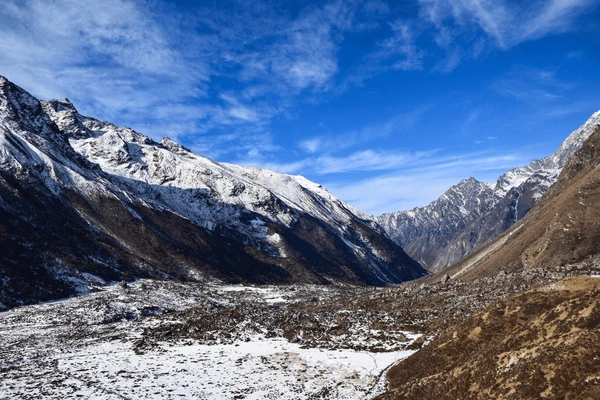
As we mentioned above, over 350 people died or were presumed missing after April 25, 2015. The scale of destruction in Langtang National Park was incomparable to other disasters, which did delay the rescue operations to some extent. This was made worse by the fact that Langtang is a pretty remote region and since roads all over the country were destroyed because of the earthquake, it took a while for rescuers to reach.
As such, the survivors took it upon themselves to set up temporary shelters around the camp. Local villagers rallied around and Langtang tea houses rose magnificently to the occasion, providing food, water, and whatever they could to help alleviate the suffering. Helicopters soon flew in to start evacuating the injured, but it would still take a few days to rescue the other survivors. The army also flew in with supplies.
Rescue efforts were delayed because Langtang village was practically non-existent. In its place stood a pile of ruins, buried under a massive pile of ice and snow.
After the initial evacuations, more and more organizations would rally around the area to help alleviate the aftermaths of the Langtang Avalanche 2015. Some of the organizations included the Langtang Relief Fund, Sunaulo Sansar, and the Himalayan Climate Initiative.
Now the Langtang village is rebuilt and prospering with great strength.
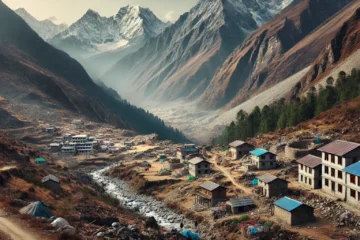
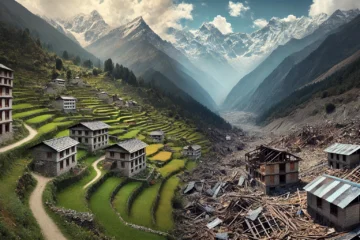
Langtang village before and after the earthquake is totally unrecognizable. It shows the story of survival and resilience.
A Popular Trekking Destination Before the Langtang Avalanche 2015
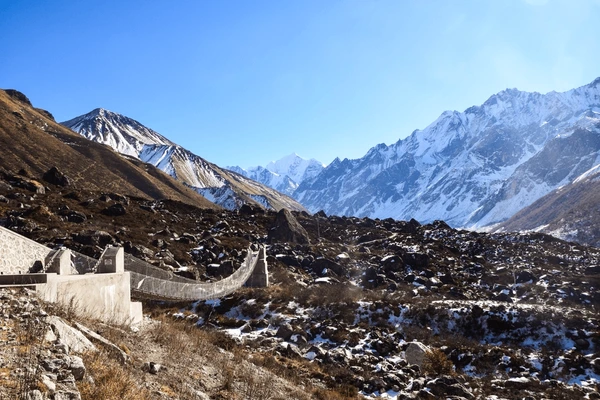
Langtang: A Popular Trekking Destination
Langtang offers stunning sights like Langtang National Park, Langtang Lirung, and Kyajin Gompa. It’s no surprise that Langtang is one of the most sought-after trekking destinations in Nepal.
Snow capped peaks speckle the gorgeous landscape which over 4,000 inhabitants call home. This popular trekking destination wasn’t discovered until the early 1950s when explorers accidentally stumbled across this area of unparalleled beauty. By the mid-1976, the Langtang National Park was established to help protect the rare flora and fauna that’s found in the area.
Earthquake or not, there’s no denying that the Langtang area is awash with raw, rugged beauty. The exceptionally fertile earth is laden with pine and Rhododendrons which blanket the forest in bright hues or red and pink in the spring. Its diverse landscapes range from alpine meadows and lush green forests teeming with rare birds to snowy terrains. These gradually give way to some of the most majestic peaks in Nepal. On a clear day, you can even see glaciers glistening in the distance.
Key Sites in the Langtang Region
In addition to its amazing beauty, the Langtang region is awash with some truly magnificent sites.The Langtang Avalanche 2015 affected these historic areas and trekking destinations in different ways. However, they were rebuilt and now stand as a testament to the locals’ resilience.
One such site is Kyanjin Gompa which, if you remember, acted as a makeshift shelter for many of the survivors. This site is actually one of the most important spiritual sites in Nepal. As such, it draws plenty of pilgrims throughout the year, both domestic and international. Kyanjin Gompa is especially known for its centuries-old monastery and ancient stupas. It’s also home to a functioning cheese factory.
Another polular site is lake Gosainkunda, famous for the Langtang Gosaikunda Trek.
The Langtang avalanche 2015 caused some damage to the site. However, it was rebuilt thanks to the tireless efforts of the survivors. A memorial was added to Langtang Village, featuring a Mani Wall. The names of all the victims were engraved upon it. Nowadays, you can still visit both the Kyanjin Gompa monastery and the cheese factory.
We strongly suggest planning a side trek to Kyanjin Gompa. It is said to be one of the best viewpoints in the area. Due to its elevation of 4,700 meters, this spot offers stunning views of Langtang Lirung. It is one of the tallest snow-capped peaks in the Langtang Himal mountain range.
Rebuilding the Region after the Langtang Avalanche 2015
Efforts to Restore Langtang Village
No stone was left unturned to rebuild Langtang Village. The recovery efforts after the Langtang avalanche 2015 took at least 2 years. It took this long to restore the region to its original status as a stellar trekking destination.
Given the scale of the destruction, rebuilding the village from scratch wasn’t easy. Most of the survivors had lost loved ones and were still grappling with post-traumatic stress. The famous Nepali strength endured, and their spirits, though bruised, remained unbroken.
Help also poured in from all sides, both locally and internationally. In addition to the rescue organizations mentioned above, many countries donated various resources. These resources were vital for the villagers to rebuild their homes after the Langtang avalanche 2015. These included steel, sand, corrugated iron, and more. The survivors also received donations in the form of clothing and food.
Tourism Recovery in the Langtang Region
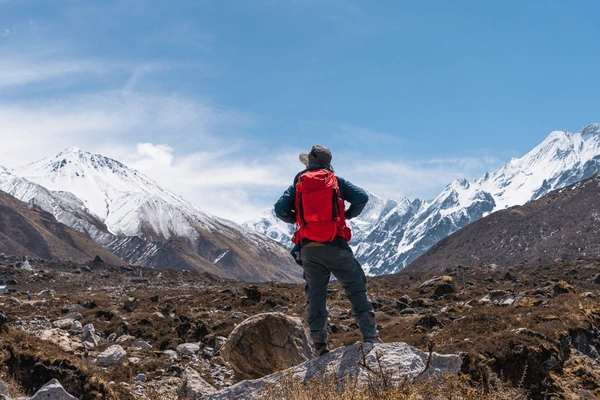
It wasn’t until 2017 that Langtang was able to market itself as a popular trekking destination again. They kept the trails closed until they rebuilt and assessed them for safety.
Up until the Langtang avalanche in 2015, agriculture was the main source of income for many villagers. However, many people still earned a living from the tourism industry. The tourism sector took a real blow after the earthquake. It took years for Langtang to become one of Nepal’s most sought-after trekking destinations again.
Security reinforced the area, making the trails and national park safer for trekkers.
The village, along with the Langtang area, has since been rebuilt to its former glory. However, it took years of hard work to recover the tourism industry. In addition to the many changes that were made, the now-reinforced tea houses were fitted with more modern facilities. These included private bathrooms, indoor heating, and wider Wi-Fi coverage. Major network providers like Nepal Telecom and Ncell have expanded their services on the trails. However, the higher and more remote areas still lack Wi-Fi or phone connectivity.
After the Langtang Avalanche 2015, hard work and time restored the area’s tourism industry. Nowadays, the peak trekking season (spring and autumn) sees an influx of local and international tourists. They spill into Langtang from all sides.
Lessons Learned from the Langtang Avalanche 2015
Preparing for Natural Disasters after the Nepal Earthquake
After the Langtang avalanche in 2015, several safety measures were implemented. These measures aim to prevent a similar widespread loss of life in the future. To begin with, the village was actually rebuilt a short distance away from the original site. The original village was later deemed directly in the avalanche’s path, funneling ice, snow, and rock down the mountain.
The tea houses, homes, and guest houses were rebuilt with avalanche-proof and reinforced materials. You may also wish to know that these structures were designed for greater safety. Before the Langtang Avalanche 2015, most buildings in the region were made of wood sourced from nearby forests. They were also constructed with unreinforced stone. Nowadays, the Langtang buildings consist of earthquake-proof material as well as concrete and steel.
Tea houses multiplied to accommodate more tourists. This helps prevent overcrowding, which can be fatal in some cases.
The Importance of Sustainable Tourism
In addition to changing the tourist industry in terms of facilities, amenities, and safety, there has been a lot of emphasis on sustainable tourism. Nepal rebuilt through sustainable tourism in its top trekking areas. This helped not only boost local livelihood but also helped preserve the region’s cultural heritage.
Choosing local accommodations, guides, or even buying locally made souvenirs can make a significant impact. These actions can greatly contribute to Langtang’s long-term recovery. You’ll also find plenty of conservation programs and trekking groups promoting the ‘leave no trace’ principle. These efforts help keep the Langtang Valley in pristine condition while protecting the local environment.
Conclusion: Remembering the Langtang Avalanche 2015
The Langtang avalanche 2015 is one of the most devastating disasters to hit the area. There’s no beating around the bush here. In seconds, the avalanche devastated the area, killing locals and tourists and shattering families.
What was once one of the most beautiful spots in Nepal soon became a scene of desolate destruction. The Langtang earthquake avalanche destroyed the main village and other villages in the Langtang valley. It left behind immense sorrow and loss.
Despite impossible odds, the Nepalese people showed remarkable strength and resilience during the earthquake. The Langtang avalanche may have destroyed the village, but it couldn’t shake their spirit.
As you visit the valley today, remember to adopt eco-friendly measures to help support the local community’s enduring strength and spirit, while preserving Langtang’s unique splendor.