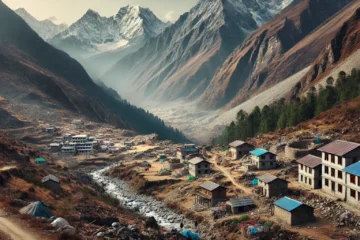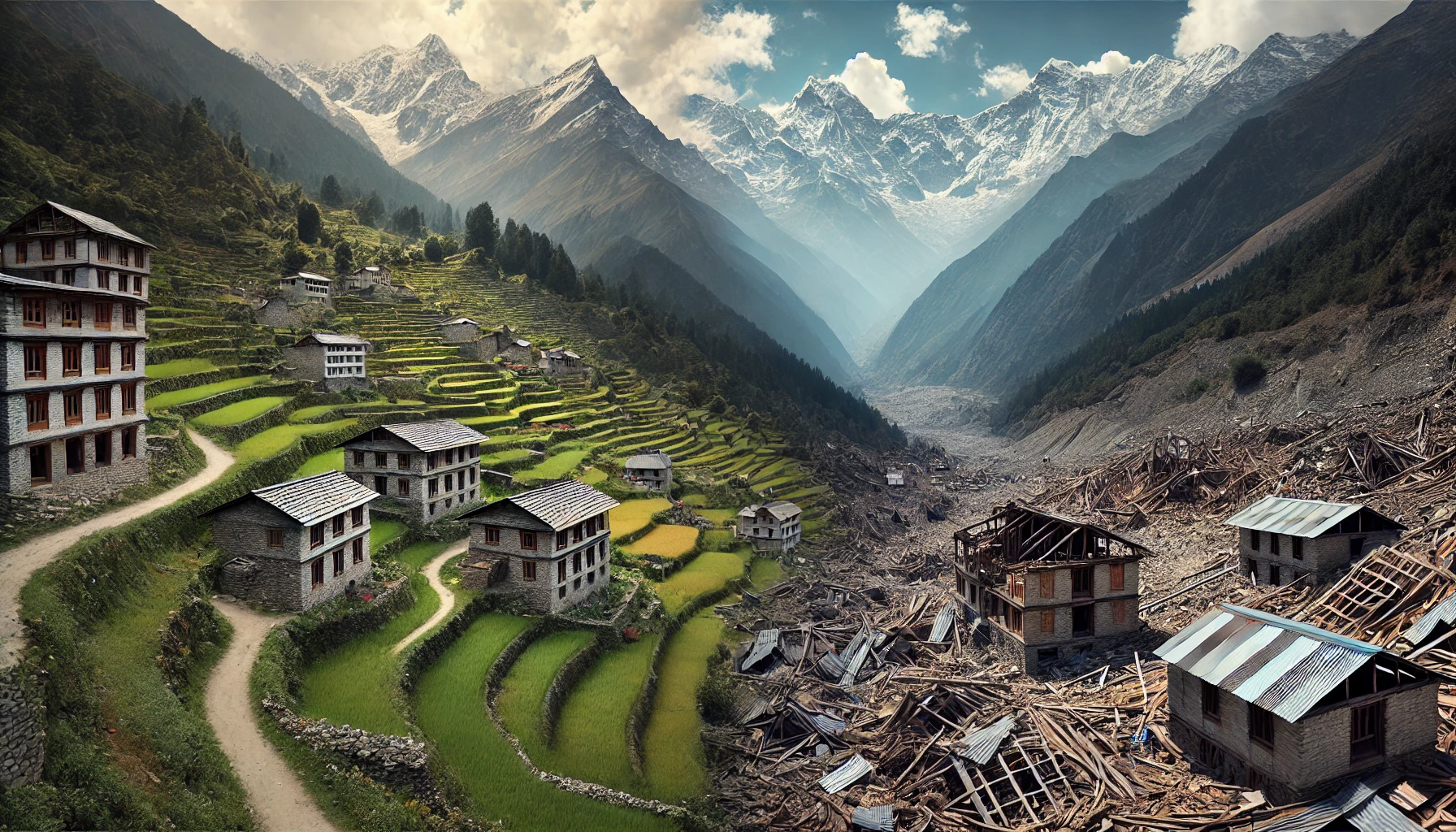
Introduction to Langtang Village Before and After the Earthquake
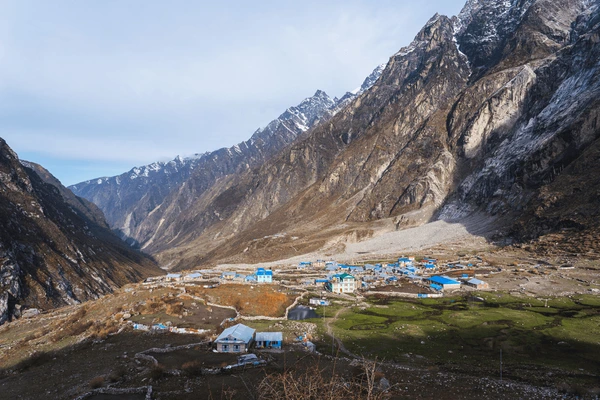
Commanding an awe-inspiring location in Northeast Nepal, Langtang is a mountain village that has long been a beacon for nature enthusiasts and trekkers. Located 50 km from the capital city of Kathmandu, the village boasts otherworldly scenery and a rich cultural heritage. For a long time, many hailed it as the third major trekking zone in Nepal, after the Annapurnas and Everest’s Khumbu area.
It’s not just another pit stop on that well-trodden Himalayan trekking circuit either. Langtang is a living, breathing community, one that’s awash with snow-capped peaks and alpine meadows. The local Gurung, Sherpa, and Tamang people welcomed trekkers from virtually worldwide. Most villages operated tea houses or worked as porters and trek guides.
Sadly, life in Langtang Village before and after the earthquake would soon be as different as could be.
Indeed, a thriving mountain oasis was not spared the devastation brought on by the Lantang earthquake of 2015. In seconds, the village was practically obliterated under an expanse of rock and ice. The catastrophic event has since been compared to the detonation of an atomic bomb.
Langtang before and after the earthquake was a devastating contrast. The earthquake reduced the once vibrant and warm place to piles of debris and rubble, resulting in significant loss of life. The effects of the Langtang Valley avalanche would last for years.
Despite the darkness, the resilient people of Langtang refused to be broken.Despite the impossible odds, they showed unwavering determination in the face of such tragedy as they started to rebuild their village from scratch.
In this article, we’ll take a look at Langtang village before and after the earthquake—and how this nook of Nepalese paradise somehow managed to rise from the ashes.
Langtang Village Before the Earthquake

The History of Langtang Village and Its Inhabitants
Langtang village lies within the Langtang National Park.
Owing to its geographical location, the village has numerous climatic zones ranging from alpine to subtropical.
Langtang National Park is home to over 4,000 locals. Langtang villagers, known locally as Langtangpa, migrated from Tibet several centuries ago. Most of the villagers practice Tibetan Buddhism. Animism and Hinduism also influence the local culture.
Southern explorers discovered Langtang Valley in the early 1950s, paving the way for modern tourism. In 1976, authorities established the National Park to protect local wildlife, fauna, and flora, boosting the local tourism industry.
New Year in the Langtang region starts in February or March, depending on when Lhosar falls. Trekkers who visit Langtang Village during spring (March, April, and May) often enjoy a festive atmosphere filled with local music, traditional dances, and other customs.
Life in Langtang village before and after the tragedy couldn’t be more different: Langtang village before the earthquake was a laidback place with hard-working, yet cheerful villagers. Dairy products sourced from yak milk, agriculture, and animal husbandry were successful businesses. Lack of air pollution combined with an innate respect for the environment gave way to a flourishing ecosystem.
People easily sourced firewood year-round from the pine forests, while Rhododendrons beautifully bloomed in spring. Fresh produce like turnips, potatoes, buckwheat, and barley grew easily in the high altitude.
There’s also an extensive variety of animals, including yaks, Himalayan Tahrs, snow leopards, and the elusive Himalayan black bear.
The daily routine before the Langtang Valley earthquake was pretty simple. True to tradition, the local people would wake up early and finish up some chores before taking their animals to gaze. Those who managed lodges would look after their guests, often providing a hearty breakfast of chappati (local flatbread), porridge, and yak cheese.
While Langtang attracted plenty of international trekkers, it also welcomed local visitors who would make a pilgrimage to Buddhist sites like Kyanjin Gompa.
It was quite difficult to get to the Langtang Valley: the lack of roads meant that you couldn’t drive a car – or even a bicycle for that matter – to the valley. Because of its isolated location, the only way to head to the Valley was on foot, something that only added to its allure.
Langtang Valley was the kind of place that seemed suspended in time. This was where one could truly disconnect from the daily grind and revel in nature’s raw, majestic beauty.
The village grew in popularity, creating more jobs and a good flow of revenue for its inhabitants. The year before the avalanche actually saw around 100,000 visitors flocking to the valley, the highest number on record.
Popular Trekking Destination in the Langtang Region
An absolute hub for explorers and trekkers, Langtang used to house some of the most popular trekking sites in the area. When the government established Langtang National Park in the 70s, more international visitors began to pour into the village. Locals often converted homestays into tea houses and lodges to accommodate the explorers.
This influx of foreign visitors meant that the village could branch out instead of depending solely on its agricultural gains. One of the most coveted trekking routes in the Langtang Region before the earthquake was no doubt the moderately challenging Langtang Valley Trek which had an elevation of over 12,000 feet.
Other trekking destinations that might appeal to more experienced hikers include the notoriously difficult Ganjala Pass Trek which takes you through the Langtang National Park.
The Tamang Heritage Trail is another gorgeous route that traverses the Langtang area. Dotted with jaw-droppingly gorgeous vistas, this trail takes you through various cultural settlements, including the Tamang village of Gatlang.
The Devastation of April 25, 2015: The Langtang Nepal Earthquake and Avalanche
The Impact of the Langtang 2015 Earthquake
Life in Langtang Village before and after the earthquake was never going to be the same again.
On April 25 2015, most of the inhabitants were having a late Saturday morning. Just one day before the Langtang earthquake, the locals had observed Ghewa, an elaborate death feast that usually takes place 49 days after someone has passed.
As per tradition, the villagers don’t stay at home during the Ghewa. Instead, everyone from the valley gathers at the monastery until late at night. Some relatives even made the trip from distant villages to participate in the Ghewa. During the Buddhist ritual, they would chant prayers and indulge in folkloric dances until past midnight.
This would be the last Ghewa in Langtang for a very long time.
At 11.56 a.m. the following morning, the entire village crumpled to dust less than two minutes after the 7.8-magnitude Langtang Nepal earthquake hit. Life as they knew it would never be the same again.
As soon as the first tremors started, several people rushed outside, fleeing for their lives. Later, rescuer workers would make the harrowing discovery that the people who stayed indoors – mainly the elderly – were among those who survived.
The devastation caused by the Langtang 2015 earthquake was as dramatic as could be. Roofs, houses, temples, and ancient artifacts had all collapsed. Thick inches of glacial snow coated the rubble.
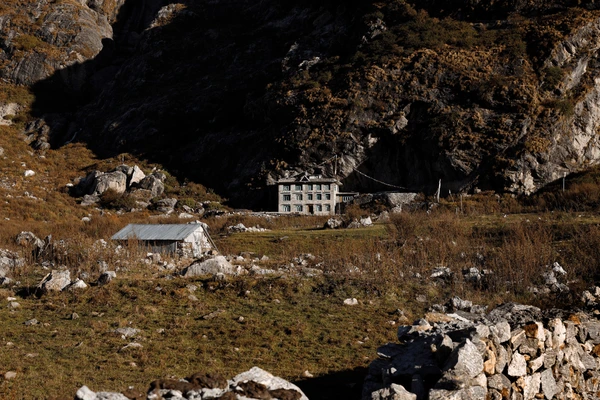
Out of the tragedy, only one house remained.
The Langtang Avalanche of 2015 and Its Aftermath
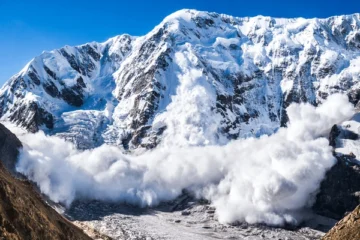
As cataclysmic as the earthquake was, it was the Langtang avalanche of 2015 that would ultimately eradicate the village in its entirety.
Langtang village is found right below Langtang Lirung’s southern face. There used to be a frozen lake and a glacier sitting in a hanging valley above Langtang. When the earthquake hit, massive boulders, part of a glacier and a frozen lake broke off, smothering the village in 40 million tons of rock and ice.
The sound was deafening.
There were sheets of ice the size of buildings rolling mercilessly towards the village. The Langtang avalanche produced shockwaves so powerful that the air pressure flattened every single tree in the area.
The survivors who could walk gathered by a ridge just outside the village as they struggled to make sense of what had just happened. From there, they could see the area where their village once stood. The earthquake wiped out the village as though it had never existed. The earthquake erased the trails into Langtang, leaving not a single animal or bird in sight.
The landslide wiped out an entire river due to its magnitude.
When the locals finally ventured back into the ruins, all that greeted them were the deceased or fractured bodies of their friends and family. Heart-wrenching wails finally broke the silence as the enormity of what had happened started to sink in.
Later that day, the local army was able to bring up some food and basic supplies for the survivors. It would take a while for professional rescue workers to get to Langtang. The survivors had to tend to the injured. They also gathered everything they would need to make it through the harrowing days that would follow. There was constant fear that the aftershocks would trigger another avalanche.
Tensions ran high as the local people argued with tourists who were believed to have broken into a safe recovered from the ruins. Known as the Langtang Israeli money controversy, this scandal would only escalate the already tense situation amongst the survivors.
Contrary to popular belief, help did not come immediately after the Langtang village avalanche. The earthquake’s widespread impact across Nepal, along with the village’s remote location, forced survivors to wait to be airlifted to nearby hospitals.
The rescue and search attempts spanned several days, mainly because numerous bodies were still missing despite their efforts. The aftershocks made the already challenging conditions even more difficult since boulders kept rolling into Langtang.
Unfortunately, most of the rescue operations would turn out to be recovery missions. More and more bodies were being freed from the rubble after the Langtang avalanche. Some bodies would never even be recovered.
Langtang Village After the Earthquake
Is Langtang Village Rebuilt?
Here’s what everyone wants to know: Is Langtang village rebuilt?
The answer is yes.
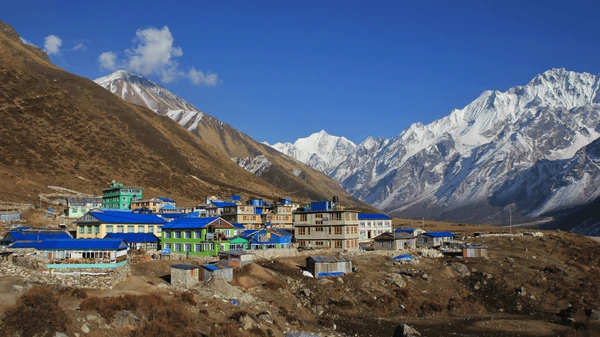
Local people and international organizations poured a tremendous amount of effort into restoring the village to its former glory. Wandering Langtang village now, it’s hard to connect this picturesque area to the ruins buried under the avalanche.
The area sustained such severe damage that it took nearly two years to rebuild Langtang Village after the earthquake. Foreign researchers didn’t officially mark Langtang safe until three years after the disaster.
In the following months, the Tamangs, Sherpas, and other local communities built temporary shelters from rocks and tents to restore their village. Nowadays, people live a short distance from the ruins.
In true Nepalese spirit, residents of neighboring villages poured into Langtang to help the victims build new houses. The new concrete homes feature better insulation and earthquake resistance.
Local and international humanitarian organizations such as Sunaulo Sansar, the Himalayan Climate Initiative, and the Langtang Relief Fund soon joined forces in a bid to breathe life into the Langtang district after the earthquake. These organizations also provided the villagers with the necessary tools and supplies they would need.
For instance, Sunaulo Sansar provided materials like corrugated iron, steel, cement, and sand, all donated from Germany, Switzerland, Italy, and South Tyrol.
Pasang Bhuti, a local resident, established the Langtang Relief Fund, making it one of the first organizations to assist with the restoration efforts. Their list of volunteer-driven projects ranges from supporting the Langtang elders, sponsoring a child’s educational journey, sponsoring vocational courses for the local ladies, and building houses.
Unfortunately, the once-thriving agricultural industry could never quite recover from the events of April 25, 2015. Tourism is now the main source of income for the residents.
Memorials and Tributes: Honoring the Victims
Remembering the People Who Died in Langtang Village
Over 300 people died in the Langtang Valley earthquake. The residents accounted for nearly 200 of the casualties. Ten members of the Nepalese army and 90 tourists also perished in the avalanche.
Among the victims are 27 local tourism staff guides and porters and 41 foreign trekkers.
The exact number of fatalities remains unknown since authorities never found several bodies.
How Langtang Valley Memorials Keep the Memory Alive
Langtang Valley before and after the earthquake saw a heartbreaking shift from a vibrant community to a more subdued site speckled by tributes and memorials. These commemorations not only honor the victims’ memories but also celebrate the resilience of the local community.
The only house that survived the avalanche now stands as a derelict reminder of life in Langtang village before and after the earthquake. They also erected a flagpole on the former ruins, its banner marking the spot where the old military building once stood.
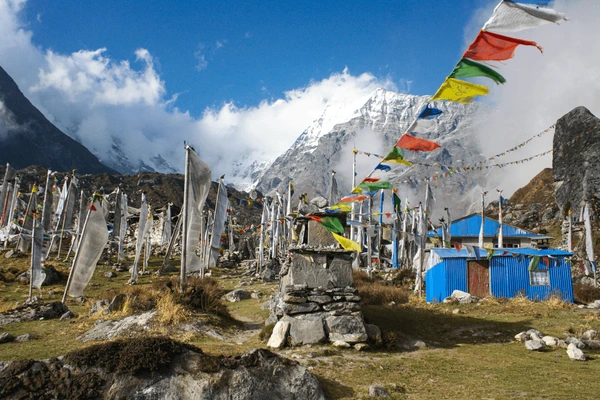
Just around the side of the valley’s Scar lies the most important memorial of all: the Mani Wall. Multi-colored prayer flags make this devotional Tibetan Buddhist wall easily recognizable, and it is filled with religious scriptures.
On the wall, you’ll also find a poignant inscription that reads ‘For the loved ones who lost their lives. Not a day passes when you are not loved and missed.’
Engraved right underneath this inscription are the names of the foreigners and Nepalis who died in the Langtang earthquake, a heartbreaking reminder of what the community went through in Langtang village before and after the earthquake.
Trekking in Langtang Village Before and After the Earthquake: What’s Changed?
Safety of Langtang Trekking Routes
We’re sure you must be wondering whether it’s safe to trek in Langtang village now after the earthquake. In short, the answer is a big, resounding yes.
After being closed for two years, the new trekking routes opened in 2017, safer and easier than before.
Significant efforts were made to enhance the safety of trekkers, both in terms of infrastructure and facilities. For starters, the villages have since relocated away from avalanche zones, reducing the risk of similar disasters in the future. Unlike the old Langtang village, the new Langtang sits higher up, away from the corridor through which the landslide was funneled.
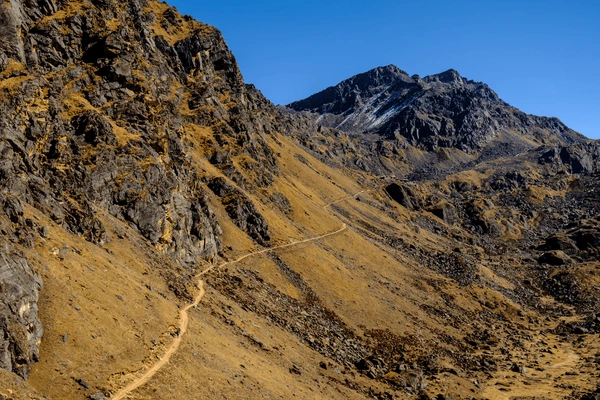
Moderately difficult routes like the Langtang Valley trek have since been fitted with railings and stone pathways.
Trekkers will also find more tea houses along the way, ensuring they have a warm space to rest and replenish.
By 2018, they successfully restored some of the area’s major landmarks, such as Kyanjin Gompa’s cheese factory and the original Gomba. Dating back to the early 1400s, this ancient area boasts lush treasures, including mountain peaks, a large glacier, and the high-altitude Gosaikunda Lake.
New Challenges and Attractions
The disaster was so impactful that the landscape in Langtang Village before and after the earthquake couldn’t be more different. People believe that the avalanche even altered the valley floor.
The landslide brought down massive boulders, a glacier, and a frozen lake, permanently altering the course of Langtang’s streams and rivers.
By far the most visible change to Langtang’s landscape is the large scar of boulders where the original village once stood. While this rugged, isolated terrain bears no sign that a proud village once stood there, you can still see the rocks that were once part of the glacier.
The new Langtang Trek route crosses the ruins of the old village, providing trekkers with the opportunity to pay homage to the lives that were lost, while reflecting on the drastic changes that occurred in Langtang Village before and after the earthquake.
Following the Langtang earthquake, local recovery efforts have significantly improved as well. World Vision’s Nepal Earthquake Response reports that organizations are now investing more funds to boost relief efforts and shelter support. The infrastructures in Langtang before and after the earthquake are also different, with more safety features introduced after the disaster.
Practical Information for Trekking to Langtang Village Now
Travel Logistics: How to Get to Langtang Village
Although Langtang Village and its surrounding areas are quite isolated, you can trust that the journey is worth it. The closest major city is Kathmandu.
The Kathmandu to Langtang journey can take 7 to 8 hours, so pack plenty of water and snacks.The good news is that you’ll find plenty of public jeeps and buses from the capital city. Although this journey may be long, stunning views of the Himalayas punctuate it.
The bus usually takes you to Syabrubesi, a popular jumping point to the Langtang Trek. From there, you can begin the trek to Langtang village. This route usually takes two to three days, with great pit stops like Lama Hotel along the way.
You can also charter a private chopper from Kathmandu Airport to Langtang Valley in half an hour.
Accommodation Options in Langtang Village Now
You’ll find around seven tea houses in Langtang Village.
In the years that followed the Langtang earthquake, the local people deployed all their efforts into rebuilding safer and more comfortable infrastructure to accommodate trekkers once again. While it took some time to reopen the trails, new tea houses and hotels have now emerged with better facilities than before.
For instance, paid WiFi is now available all the way up to the Langtang Valley Hotel. A local phone carrier serves some areas, although the connection can be choppy at times.
Previously, tea houses in Langtang mostly comprised of wooden structures with partitions between the rooms. The post-2015 establishments now offer modern facilities, including central dining halls, indoor heating, and solar power for devices.
Conclusion: Why You Should Visit Langtang Village After the Earthquake
There are some catastrophic events that can be hard to wrap our minds around. The changes in Langtang village before and after the disaster are one of them.
Despite their traumatic past, one can’t help but be in awe of the villagers’ strength of spirit, determination, and unwavering courage in the face of such calamities. The local people have faced impossible odds, but in the end, the resilience of Langtang Village was what really shone through.
Langtang Valley before and after the earthquake may be two drastically different places, but this is still one of the most transformative treks you will take in Nepal. Remarkable scenery speckles popular trekking destinations like the Langtang-Tamang Heritage Trek. Despite their painful history, the people are genuinely kind and hard-working. There’s no denying that a visit to Langtang Valley can be quite a humbling experience.
More importantly, by choosing to trek through Langtang, you become part of a larger effort to help this resilient community recover and thrive. You’ll boost the local morale and make a meaningful impact, all while experiencing the beauty of Nepal at its rawest.
So, what are you waiting for? Book your trip to Langtang Valley today and brace yourself for the most epic adventure of your life!