


Welcome to one of the most breathtaking spots in Nepal!
An area punctuated by quaint villages, deep forests, and magnificent mountains, Langtang is the kind of journey that promises both cultural richness and natural beauty. Indeed, it should come as no surprise that the Langtang Valley Trek is one of the most popular trails Langtang district.
The Langtang trail may be among the shortest treks in Nepal, but it offers an unparalleled adventure. That, coupled with picturesque views of those Himalayan peaks makes it a perfect destination for amateur and experienced trekkers alike. Along with being super scenic, the Langtang trek is also very accessible. While there are some steep sections, it’s suited to rookie trekkers – so much so that beginners often embark on a Langtang adventure for practice and experience before hitting more complicated trails.
Best of all, the Langtang Valley trek cost is quite affordable, especially when compared to longer trails in Nepal. For instance, the Everest region or Langtang Gosaikunda Trek cost can be higher due to the remoteness and lengths of the trails.
While it’s a fairly affordable adventure, the trekking expenses can mount up quickly if you’re not careful. When cost planning, bear in mind that your expenses will generally vary according to your travel preferences, season, and whether you hire guides and porters.
Breakdown of Langtang Trek Costs: What to Expect
Here’s the most important thing to know when planning your expedition: your Langtang trek cost is directly related to the season you’re trekking. We also encourage you to make all your bookings in advance, so you get the best bang for your buck.
With that in mind, let’s take a look at the different expenses you need to consider when budgeting for your Langtang Valley trek cost.
Accommodation and Food Costs on the Langtang Trek
A fair part of your budget will go directly to the accommodation and food costs, so it’s very important that you carefully map out your lodging expenses and food costs.
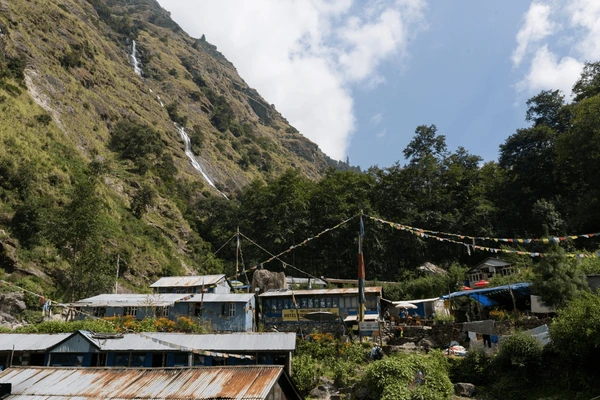
For starters, you’ll find plenty of tea houses on the route where you can spend the night. Most tea houses charge around $4 to $6 per night. One of the most popular rest stops along the way is no doubt the Lama Hotel which basically consists of a collection of accommodation options and coffee shops. The Lama Hotel has around seven tea houses, so you can easily make your choice according to your budget and preferences.
The tea houses’ rates vary according to the facilities they provide. Generally speaking, you can expect amenities like Wi-Fi, hot water, and charging ports for your devices. In addition, most tea houses feature private rooms, blankets, western-style toilets, and shared dining rooms.
When planning your Langtang Trek Nepal cost, don’t forget to take the meal pricing into consideration. A super popular and hearty meal on the trek is Dal Bhat which consists of a plate of steamed white rice with a side of fragrant lentil soup. This is commonly served alongside local pickles and curried vegetables. Best of all, most tea houses offer free refills. You may wish to budget around $2 to $5 for a plate of Dal Bhat.
All guest houses offer Dal Bhat, along with staples like chapati (flatbread), eggs, oat porridge, momos (steamed Nepalese dumplings), pasta, soups, and curries. Be sure to try local specialties like Sea Buckthorn juice and yak cheese.
Here’s an estimate of what basic items may cost you:
- Hot drinking water: $0.5
- Hot honey, ginger, and lemon water: $2.50
- Bottle of mineral water: $2
- Tea: $1.15
- Coffee: $1.15
Langtang Trek Cost for Guides and Porters
If you’re planning an independent trek, you may wish to hire guides and porters to help you through your journey. An experienced trekking guide will go a long way towards ensuring your safety on the trails and if you ask us, they’re well worth the cost!
It’s important to know that according to local laws, all international trekkers must be accompanied by a guide when hiking anywhere in Nepal. While the rule isn’t always reinforced, it’s still advisable to find an experienced guide to be on the safe side.
When hiring guides or porters, the rule of thumb is this: cheaper doesn’t always mean better. Cheaper doesn’t always mean better, especially up there on the trails. Besides, if you ask us, forking some extra money for a licensed and experienced guide is ultimately worth it.
The good news is that the daily fees aren’t necessarily expensive, especially if you factor in the currency conversion. The guide’s daily fees can range from $15 to $22 per day.
As for the porter services, you may wish to budget between $10 and $15 per day.
Tipping isn’t mandatory in Nepal, but it’s encouraged, so this can also impact your Langtang Valley trek guide cost.
After all, guides and porters put their lives at risk to ensure a safe and successful trekking expedition. Most international trekkers tip around 10% to 15% of the total Langtang circuit trek.
Langtang National Park Entry Permit and Other Fees
Another important thing to consider when planning your total Langtang trek cost is the trekking permits. Because the trail goes through the Langtang National Park, you’ll need to get both a National Park Entry permit as well as a TIMS card. Be sure to have your travel documents ready because you’ll go through a couple of checkpoints.
The Langtang National Park entry fees are $22 while the TIMS card can set you back $17.
You’ll be able to get a TIMS card from the Tourism Board Office in Kathmandu (open from 10 a.m. to 5 p.m., Monday to Friday and Sundays). You’ll need the following to get the TIMS card:
- $17 in cash (Nepalese currency only)
- Two passport-sized photos
- Passport
- Application form (available online or directly at the office)
Bear in mind that if you can’t get the permit in Kathmandu, you can also sign up for it at the Syabrubesi checkpoint for the same price. Similarly, it’s possible to register for the National Park permit at the second checkpoint on the way to Syabrubesi. For the permit, you’ll need to present your passport as well as the TIMS card.
By the way, when crossing through the Langtang National Park, remember to keep your eyes peeled for the rare and elusive red panda!
Travel Costs: Reaching the Starting Point of Langtang Trek
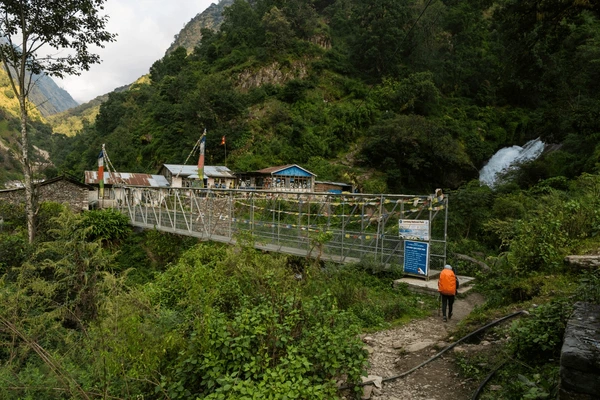
Okay, now that we’ve covered the essentials, let’s move on to the transportation options from Kathmandu and how much they’re going to cost you. The first thing you need to know is that you can head from Kathmandu to Syabrubesi by local bus or rent a private vehicle to make the road journey in less time.
Private Jeep vs. Local Bus: Which Transportation Options to Choose?
As scenic as the journey is, the local bus can take quite a bit of time (7 to 9 hours) to reach Syabrubesi because there are numerous stops along the way to pick up or drop off passengers. Buses leave daily from 6 a.m. to 8 p.m. A one-way ticket usually costs around $6 – $9. You may wish to add around $4 for a taxi from Thamel to the bus station.
A faster option would be to book a private jeep that’ll take you from Kathmandu to Syabrubesi in around 6 to 7 hours. This is the more expensive option though since you’ll need to fork around $185 to $225 per person. Alternatively, you can always opt for a shared private vehicle which is slightly less expensive. We also recommend that you browse around in Thamel to compare prices and (hopefully!) find a more affordable option.
Budgeting for the Return Trip
When trying to work out your Langtang Trek cost, don’t forget to factor in the cost of transportation back to Kathmandu from the Langtang region. You can expect to spend around the same amount on travel expenses if returning by local bus or private jeep.
Alternatively, some trekkers like to fly from Langtang to Kathmandu by helicopter. This will definitely up your transportation budget (think around $500 per person for a group of 5) but if you can loosen up those purse strings, the experience is definitely worth it!
Langtang Trek Cost for Nepali Trekkers
Now, if you’re a Nepali citizen, it’s important to know that the same costs don’t apply to you. Local prices for accommodation and permits tend to be lower when compared to international rates.
How Much Cost is Needed for Langtang Trek for Nepalese?
Nepali citizens may wish to factor in local travel discounts when planning their expedition – perfect if you’re looking for a budget trek! Indeed, the Langtang trek cost for Nepali citizens is lower than for international trekkers, averaging around $185 per person for a 5-day trek. This should normally include accommodation, food, and transport.
Because of the discounted Nepali trekking expenses, you can generally expect to spend $1 on the Langtang National Park permit. The TIMS card should set you back around $1.50. When mapping out your Langtang trek cost, rest assured that as a Nepalese citizen, you’re entitled to discounts on accommodation as well.
As such, the cost of a basic room at a tea house with shared restroom facilities can cost between $1.50 and $3.70 per person per night. Upgraded facilities with deluxe rooms and en-suite bathrooms tend to be more expensive, averaging around $4 to $7 per night.
As far as the Langtang trek cost for transportation is concerned, Nepali citizens usually pay $3 to $4 for a one-way ticket from Kathmandu to Syabrubesi.
Additional Costs on the Langtang Trek
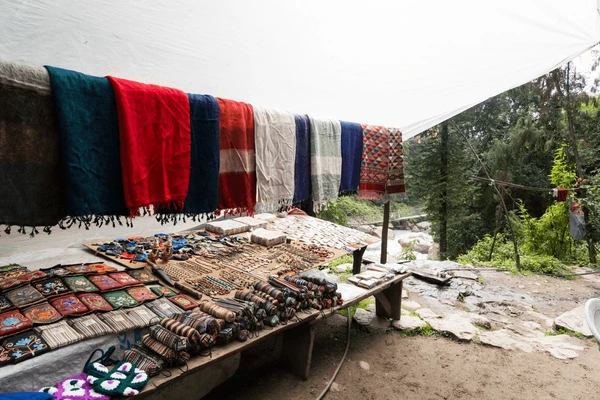
Of course, there are other Langtang Trek costs that you should take into consideration when planning your trip. Unexpected expenses can occur at any point in your journey, so be sure to have some leeway in your budget.
In this section, we’ll give you a breakdown of any unexpected costs that can crop up during your Langtang trek.
Sleeping Bags, Hot Showers, and Charging Fees
When planning your Langtang trek cost, not a lot of newbie trekkers know they should also budget for sleeping bags. After all, these can be quite bulky to pack and lug around along the trail, but you can always rent your own for just $1 to $3 per day.
Now while lower-altitude guest houses usually offer free comfort services like hot water, this may be chargeable once you reach higher altitudes. Because the pipes are sometimes frozen due to the weather, you may be offered a large bucket of hot water instead of a hot shower. Hot water usually costs around $1 to $1.5.
As far as the Langtang trek costs are concerned, we also recommend that you plan for extra expenses like equipment rental. For example, renting a down jacket will set you back between $1.50 and $2 per day while trekking poles cost $0.75 to $1.20 per day. Renting a trekking backpack costs anywhere from $1 and $3 per day, depending on the quality.
You may also wish to consider additional fees like mobile phone charging, a service that’s usually chargeable at higher-altitude tea houses. This may cost you $1 – $2 per hour. By the same token, some places also charge you for the Wi-Fi (approx. $4 for a 200MB card or $8 for 1GB).
Travel Insurance and Altitude Sickness Medication
Trekking through the Langtang region is generally safer than say, planning an Everest Base Camp trek. However, the high altitude can cause some issues, especially if you haven’t acclimatized. And even if you do take all the necessary health precautions, accidents do happen and the last thing you want is to get saddled with a massive helicopter evacuation or hospital bill.
As part of your safety planning, we strongly encourage you to get solid travel insurance with high-altitude trekking. You may also wish to enquire whether preventive altitude sickness medication is covered.
On average, travel insurance costs around $150 for the trek, but be sure to compare various packages so you can find one that suits your budget and needs.
Langtang Trek Routes and Related Costs
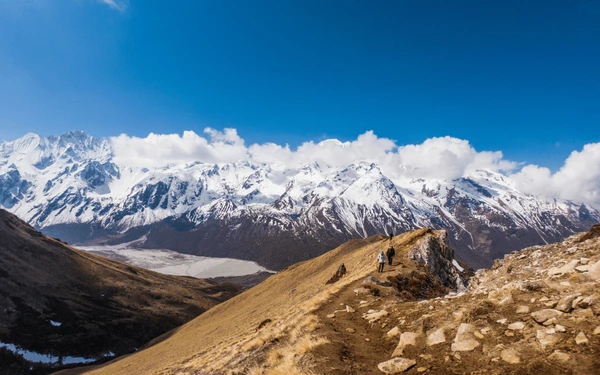
One of the things that makes the Langtang region so special is that the area is crisscrossed by various routes, each more scenic than the other. Read on to learn more about the different routes and how they’ll impact your wallet.
Langtang Trek Nepal Cost: A Lush Adventure in Nepal
By far the most popular adventure in the area is the Langtang Valley trek. Steeped in the local history, the Langtang Valley is as lush as it’s diverse. This may be one of the shortest treks in Langtang, but we promise it’s filled with an abundance of cultural experiences and natural wonders.
For starters, you’ll be trekking through bamboo and rhododendron forests, crossing through suspension bridges. These are quite a sight to behold in the spring when they bloom to blanket the whole place in splashes of bright pink, red, and white. You’ll also marvel at the snow-capped mountains, raging waterfalls, and rivers that gurgle gently through the forests.
By far, the highlight of a Langtang Valley trek is the stop at Langtang Village. While the village was completely destroyed in the notorious 2015 avalanche and earthquake, it managed to rebuild itself right from the ground. We suggest that you spend a few days in the village talking to the locals and learning more about the place’s history.
Accommodation in Langtang Village generally costs around $10 to $25 per night, depending on the season and amenities. To cut back on expenses, you can always opt for a basic lodge with a shared bathroom.
One of the top things about Langtang Village is that it serves as a great jumping point to nearby attractions like Kyanjin Gompa. This historic spiritual site is especially known for its centuries-old monastery. If you want to spend a couple of days in Kyanjin Gompa, you’ll be glad to learn that the area, as isolated as it is, does have a couple of guesthouses. Food and accommodation up there tend to be more expensive though because of the altitude. Think around $30 per night for a lodge with communal facilities.
Just two hours from Lama Hotel takes you to another cultural community known as Ghodatabela. Standing at an elevation of 2,800 meters, this settlement is especially known for its picturesque views and quaint tea houses. If you ask us, this is one of the top trekking routes in the area for soaking up the amazing surroundings.
All in all, you’re looking at around $1,000 per person for the whole Langtang Valley Trek, including accommodation, meals, tour guide, transportation, and more.
Here’s a quick summary of the expenses you can expect on average when budgeting for your Langtang Valley Trek cost:
- Transportation: $10 to $200, depending on public or private transfer
- Accommodation: $3 to $15 per night
- Food: $3 to $6 per day
- Equipment rental: $1 to $6 per day, depending on the gear
- TIMS permit: $17
- National Park Entry: $22
- Porter: $10 to $15 per day, excluding tips
- Guide: $15 to $22 per day, excluding tips
- Insurance: $150
Langtang Gosaikunda Trek Cost: An Extended Route with Higher Costs
The Gosaikunda trek in the Langtang region is rich in natural wonders.
The Langtang Gosaikunda Trek is more expensive than the regular Langtang Valley trek.
This is because Gosaikunda is more remote plus it takes trekkers far longer to reach there. If you don’t mind the additional expenses though, this extended trek is absolutely worth it!
The trek’s highlight is the stunning Langtang Gosaikunda Lake, a key spiritual site for both Buddhists and Hindus. Because of this, it’s not surprising to encounter plenty of pilgrims along the way.
Trekking in August may offer the chance to witness the Gosaikunda Lake ceremony, usually held during the full moon. During this ceremony, Buddhists, Shamans, and Hindu pilgrims usually engage in religious rituals. This is followed by cultural performances through celebrations, dances, and music.
The Langtang Gosaikunda Lake trek offers stunning views of the Himalayan peaks, including Langtang Lirung, Tsergo Ri, and Ganesh Himal.
We suggest that you set aside between $1,500 and $1,600 for a Langtang Gosaikunda trek if booking through a tour company.
Best Time to Trek and Its Impact on Cost
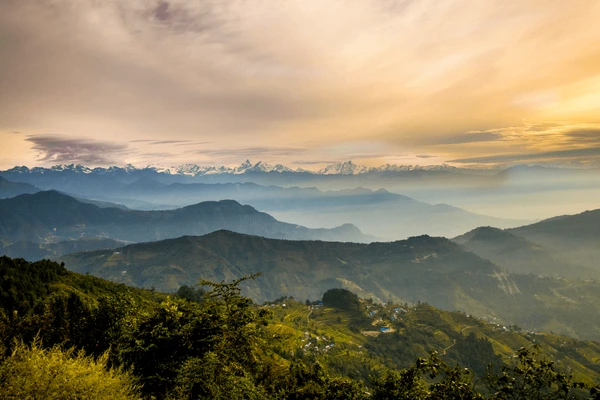
If you’re new to trekking here, you may not know that the season directly affects your Langtang trek cost. Carefully compare seasonal packages to get the best deals.
Langtang Trek Costs: Peak Season Costs vs. Off-Season Discounts
The best seasons for the Langtang trek aren’t always the cheapest.
Autumn and spring are ideal for trekking Langtang Valley due to excellent weather and visibility. Precipitation risks are low, the sky is perpetually blue during the day, and the climate is moderate. Humidity is at its lowest, ensuring comfortable trekking conditions. Unfortunately, this comfort does come with seasonal prices – something that you may wish to keep in mind when travel planning.
During peak trekking seasons (spring and autumn), accommodation and food prices rise due to high demand. In fact, tea houses fill up super quickly which drives up the demand. If trekking during peak season, remember to make your bookings well in advance to land yourself a spot.
Off-season discounts are usually available in the summer (monsoon season) and winter (December to February). Despite the low prices though, you’ll probably face quite a few challenging conditions if trekking then. If you ask us, trekking during the monsoon is a big no-no. Monsoon conditions bring slippery trails, poor visibility, mud, and a constant risk of landslides. Regardless of cost or experience, avoid the trails during monsoon season.
Winter poses challenges but offers a unique trekking experience for seasoned trekkers. Temperatures dip below freezing, but snowy, quiet trails offer a unique experience.
Recommended Read: Langtang before and after the earthquake
Conclusion: Plan Your Langtang Valley Trek Cost Effectively
We hope this guide helped you better understand the Langtang trek cost so you can properly map out your budget!
Your Langtang trek costs depend on the season, accommodation, and transportation choices. To cut back on travel costs, we would really urge you to plan ahead and reserve everything in advance.
By booking months in advance and choosing the right time to trek, you can significantly reduce your Langtang trek costs. Consider food prices too, as they rise with elevation due to supply challenges. Additionally, remember to plan for any porters and guides whom you may wish to hire to help you out.
Most importantly, pack your sense of adventure for an unforgettable journey!
FAQ Section: Common Questions About Langtang Trek Costs
Here’s the good news: local travel expenses are significantly lower for Nepali trekkers than international ones – perfect if you’d like to plan a budget trek!
So, if you’re wondering how much cost is needed for Langtang trek for Nepalese, well the answer is that you really don’t need a lot at all. Not only will you enjoy heaps of discounts, but permits, accommodation, and transportation are far more affordable for the locals.
It’s not advisable to venture out to the trails without hiring trekking guides and porters. Guide fees range from $15 to $22 per day, while porter fees are typically $10 to $15 per day.
Don’t forget to factor in the tips as well when budgeting for your Langtang Valley trek guide cost.
The Langtang Valley Trek is more affordable than climbing Mount Everest, but there are still ways to save costs.
A great budget tip is to book accommodation in advance. As we mentioned above, tea houses fill up quickly and the last remaining rooms usually increase in value. The sooner you book your room, the cheaper it may be. If you’re an experienced trekker with good endurance, consider booking your Langtang trek in winter to save costs.